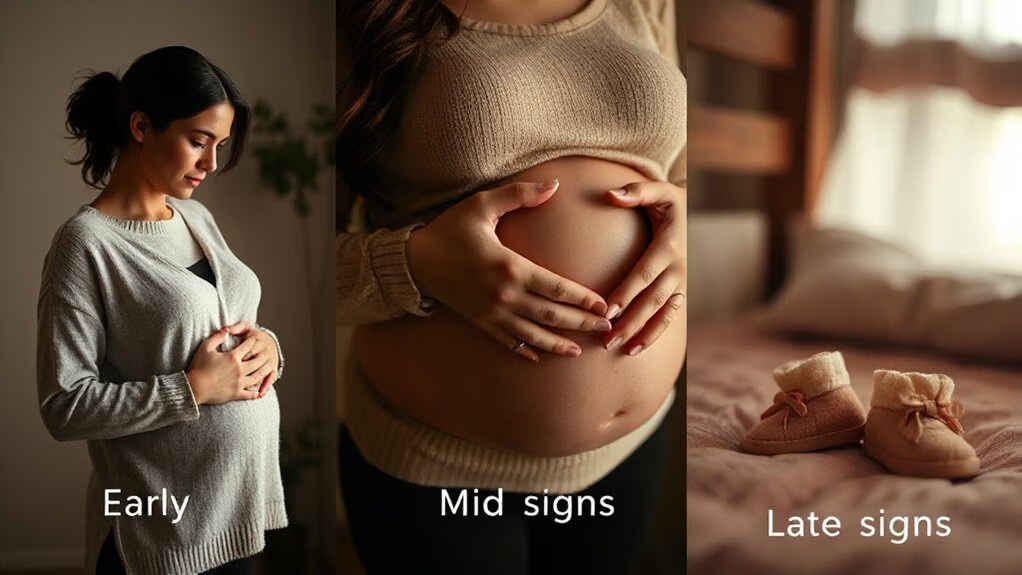
Pregnancy unfolds across three trimesters — each with a distinct hormonal profile, physiological demands, and set of symptoms. Understanding what is normal at each stage, why it is happening, and when a symptom warrants medical attention is one of the most practically useful things a pregnant person can know. Here is a thorough guide to the key signs of each trimester.
First Trimester (Weeks 1–12): The Hidden Transformation
The first trimester is dominated by the dramatic hormonal surge required to establish and maintain the pregnancy. Human chorionic gonadotropin (hCG) rises exponentially in the first weeks, doubling approximately every 48 hours until around week 10. Progesterone and oestrogen rise sharply. The body is building the placenta, which will sustain the pregnancy for the next seven months, while simultaneously managing the embryo’s most critical developmental window — all major organ systems form between weeks 3 and 8.
Key first-trimester signs include: nausea (with or without vomiting), fatigue, breast tenderness, frequent urination, heightened smell sensitivity, food aversions and cravings, light spotting, bloating, and mood variability. Many people also experience headaches driven by hormonal fluctuation and increased blood volume.
One of the most important things to know about the first trimester: most of the dramatic symptoms are caused by the very hormones that indicate a healthy, progressing pregnancy. Severe nausea, in particular, is associated in studies with lower miscarriage risk — the discomfort, paradoxically, is often a reassuring sign. That said, hyperemesis gravidarum (severe, continuous vomiting causing dehydration and weight loss) requires medical treatment.
Sign 1: The Nausea–Aversion–Craving Triad
Nausea, food aversions, and food cravings often coexist simultaneously in the first trimester, and they interact with each other in ways that can make nutrition management challenging. The nausea often makes eating difficult; the aversions remove previously tolerated foods from the available options; and the cravings frequently tend toward carbohydrates and bland foods (which are the safest choices for an unsettled stomach) but can also involve highly specific and sometimes nutritionally unexpected combinations.
Food aversions — particularly to meat, eggs, coffee, and alcohol — are thought to serve a protective function, steering pregnant people away from foods that carry higher contamination risk or are physiologically inappropriate during early fetal development. The cravings are less well-understood but may reflect genuine nutritional needs or result from altered taste perception driven by hormonal changes.
Management: Eat what you can tolerate in small, frequent portions. This is not the moment to insist on a nutritionally perfect diet — getting adequate calories and staying hydrated takes priority. Most aversions resolve in the second trimester, when appetite typically returns and nutritional density can be a priority again.
Second Trimester (Weeks 13–26): The Reprieve — and New Developments
For most pregnant people, the second trimester brings significant relief. hCG levels stabilise, the placenta takes over hormonal management from the corpus luteum, nausea and fatigue typically ease, and energy returns. This is commonly described as the most comfortable trimester — the dramatic early symptoms have subsided, and the third-trimester physical demands have not yet arrived. The visible pregnancy begins during this period, and fetal movement is felt for the first time (typically between weeks 16 and 22).
Key second-trimester signs include: visible bump, fetal movement (quickening), round ligament pain, back pain beginning, skin changes (linea nigra, melasma, stretch marks), nasal congestion (pregnancy rhinitis), and often improved energy and appetite.
Sign 2: Round Ligament Pain — The Sharp Stretch
Round ligament pain is one of the most commonly reported second-trimester symptoms and one of the most alarming for first-time pregnancies — because it can feel sudden and sharp. The round ligaments are two thick ligaments that support the uterus on either side, running from the uterine front to the groin. As the uterus expands rapidly in the second trimester, these ligaments are stretched significantly. Quick movements — turning over in bed, standing up quickly, sneezing or coughing — can cause a sharp, stabbing pain in the lower abdomen or groin that can last from seconds to minutes.
Round ligament pain is normal and does not indicate a problem with the pregnancy. However, any abdominal pain that is severe, continuous, accompanied by fever, vaginal bleeding, or changes in fetal movement should be evaluated promptly — those symptoms are not round ligament pain.
Management: Move slowly when changing position. Applying gentle heat to the groin area can help. Prenatal yoga strengthens supporting muscles and can reduce frequency and severity. If pain is persistent or severe, a physiotherapist specialising in pelvic health can provide specific exercises and support.
Sign 3: Skin Changes — Linea Nigra, Melasma, and Stretch Marks
Pregnancy dramatically increases melanin production through elevated oestrogen and progesterone stimulating melanocyte-stimulating hormone. The most visible results are: the linea nigra (a dark vertical line running down the centre of the abdomen that appears in roughly 75% of pregnancies); melasma or chloasma (patches of darker pigmentation on the face, particularly across the cheeks, nose, and forehead — sometimes called the “mask of pregnancy”); and darkening of the areolas, moles, and freckles.
Stretch marks (striae gravidarum) appear in 50–90% of pregnancies as the skin stretches faster than collagen production can keep pace. They initially appear as pink, red, or purple streaks, most commonly on the abdomen, breasts, hips, and thighs, and fade to silver-white after delivery. Genetic predisposition is the strongest predictor — if your mother had them, you likely will too, regardless of product use. Adequate hydration and moisturising from early pregnancy may reduce severity but does not reliably prevent them.
Management: Sun protection (SPF 50) significantly reduces melasma severity. Most skin changes fade substantially after delivery, though they may not disappear entirely. Stretch marks do not respond well to topical treatments but do fade considerably over time.
Third Trimester (Weeks 27–40): The Home Stretch
The third trimester is characterised by the baby’s rapid growth (gaining approximately 500g per week in the final weeks), the body’s preparation for labour, and the physical demands of carrying a significantly larger weight. Sleep often becomes difficult, physical discomfort increases, and the body produces early signs of the upcoming labour process throughout the final weeks.
Key third-trimester signs include: Braxton Hicks contractions, pelvic pressure and “lightning crotch,” heartburn and reflux, swelling (oedema) of feet and ankles, shortness of breath, back and hip pain, frequent urination returning, sleep difficulty, and towards the end, the signs of labour approaching (cervical mucus plug loss, lightening, nesting instinct).
Sign 4: Braxton Hicks — Practice Contractions
Braxton Hicks contractions are irregular, painless or mildly uncomfortable tightening sensations of the uterus that most pregnant people experience from around week 20 onwards, becoming more frequent and noticeable in the third trimester. They are the uterus “practising” the muscle coordination it will need for labour — a toning process that prepares the organ for its most demanding physical task.
Distinguishing Braxton Hicks from true labour contractions: Braxton Hicks are irregular and do not increase in frequency or intensity over time; they typically ease when you change position, walk, or drink water; they are usually felt as tightening across the front of the abdomen rather than as low back pain radiating to the front. True labour contractions are regular, increase in frequency and intensity, do not ease with position changes or hydration, and are typically accompanied by low back pain.
Management: Stay hydrated (dehydration is a common Braxton Hicks trigger). Rest when they are uncomfortable. If you have more than 6 in an hour, if they become regular and rhythmic, or if you are before 37 weeks, contact your midwife or hospital.
Sign 5: Oedema — Swelling in Feet, Ankles, and Hands
Mild swelling of the feet, ankles, and hands is normal in the third trimester and affects the majority of pregnancies. It results from the increased blood volume of pregnancy (which rises by 40–50% over the course of pregnancy), reduced venous return from the legs as the growing uterus compresses pelvic veins, and the natural fluid retention driven by progesterone and aldosterone.
Most pregnancy swelling is worst at the end of the day and in hot weather and eases with elevation of the legs. However, sudden, severe, or rapidly worsening swelling — especially in the face and hands, or accompanied by headache, visual changes, or pain under the right ribs — can be a sign of pre-eclampsia, a serious pregnancy complication that requires immediate evaluation.
Management: Elevate feet regularly. Wear compression stockings if swelling is significant. Avoid prolonged standing. Stay hydrated — counter-intuitively, adequate hydration helps reduce fluid retention. Report any sudden or concerning swelling to your midwife or doctor promptly.
Sign 6: Heartburn and Reflux in the Third Trimester
Heartburn affects up to 80% of pregnant people by the third trimester. The causes are both hormonal (progesterone relaxes the lower oesophageal sphincter, allowing acid to reflux upward) and mechanical (the growing uterus displaces the stomach upward and increases abdominal pressure). It often worsens dramatically in the final weeks, when the baby’s head engages in the pelvis — somewhat relieving the upward pressure on the stomach — but can be severe in the weeks before.
Management: Eat small, frequent meals. Avoid lying down within 2–3 hours of eating. Elevate the head of the bed. Liquid antacids (calcium carbonate types) are generally considered safe in pregnancy — check with your midwife. Ranitidine and omeprazole have also been used in pregnancy when antacids are inadequate, with your doctor’s guidance.
Sign 7: Signs Labour Is Approaching
In the final weeks, the body signals the approach of labour through several recognisable changes: lightening (the baby dropping lower into the pelvis, which can suddenly ease breathing but increase pelvic pressure), loss of the cervical mucus plug (a thick discharge, sometimes blood-tinged, as the cervix begins to soften and dilate), increased Braxton Hicks frequency, a burst of nesting energy, loose stools (as the body clears the bowel in preparation), and occasionally a low backache that does not fully resolve.
These signs indicate that labour will likely begin within days to weeks, but they do not give a precise timeline. True labour is confirmed by regular, progressing contractions — typically 5 minutes apart, lasting 1 minute each, for at least 1 hour (the 5-1-1 rule) — or by spontaneous rupture of membranes. When either of those occurs, contact your birthing unit.
⚠ Disclaimer
The information provided on this website is for general informational and educational purposes only. It is not intended as, and does not constitute, medical, psychological, legal, or professional advice. Always consult a qualified healthcare provider, licensed therapist, or other appropriate professional before making any decisions based on the content of this site. SignsOf.org does not endorse any specific treatment, product, or course of action. Reliance on any information on this site is solely at your own risk.
Post Disclaimer
The information contained in this post is for general information purposes only. The information is provided by 7 Signs of Pregnancy by Trimester: Early, Middle, and Late Symptoms Explained and while we endeavour to keep the information up to date and correct, we make no representations or warranties of any kind, express or implied, about the completeness, accuracy, reliability, suitability or availability with respect to the website or the information, products, services, or related graphics contained on the post for any purpose.