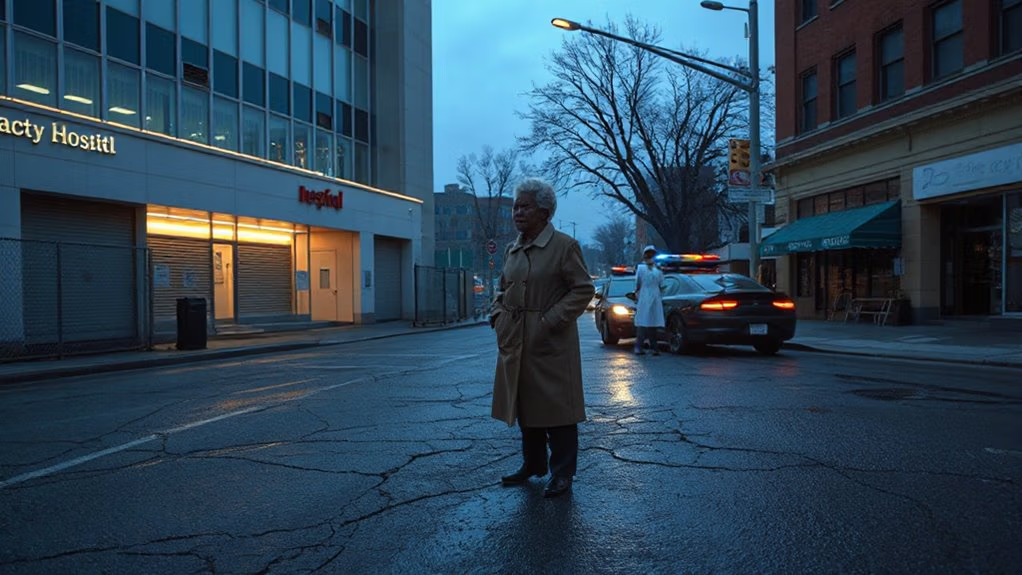
You’ll find racial inequality woven through America’s systems—from criminal justice where you’re more likely arrested for identical offenses if you’re Black, to schools funded by property taxes that shortchange neighborhoods of color. Homeownership remains difficult due to historical lending discrimination, while healthcare disparities mean you might receive different treatment based on race. Political representation gaps limit your voice in policy-making. These interconnected barriers compound daily, affecting education, wealth, and opportunity. Understanding how deeply these systems run reveals what transforming them truly demands.
Key Takeaways
- Black Americans face disproportionately higher arrest rates and more severe charges than white counterparts for identical offenses.
- School funding through local property taxes creates vast resource disparities, disadvantaging students in lower-income neighborhoods.
- Historical redlining and lending discrimination continue preventing Black families from building generational wealth through homeownership.
- Black patients receive inferior healthcare treatment, including less pain medication and higher maternal mortality rates.
- Voter suppression and gerrymandering limit political representation of communities of color, reducing policy influence on systemic reforms.
How Racism Shapes the Criminal Justice System

When you look at who’s arrested, convicted, and imprisoned in America, you’ll notice a stark pattern: Black Americans are arrested at considerably higher rates than their white counterparts, even for the same offenses.
This disparity doesn’t stem from higher crime rates among Black communities—research shows that’s simply not true. Instead, you’re witnessing systemic bias embedded throughout law enforcement and the courts. Police deploy more heavily in primarily Black neighborhoods, increasing arrest probabilities. Prosecutors charge Black defendants more severely. Judges impose harsher sentences.
You’ll also encounter wealth disparities that compound these inequities. When you can’t afford quality legal representation, your conviction risk climbs dramatically. Bail systems hit poorer communities harder, forcing people to plead guilty just to return home.
These aren’t isolated incidents—they’re structural failures. You’re observing how institutional racism operates across interconnected systems, perpetuating cycles of incarceration that devastate Black families and communities while remaining largely invisible to those unaffected by them.
Educational Inequality: Why School Funding Perpetuates Racial Gaps
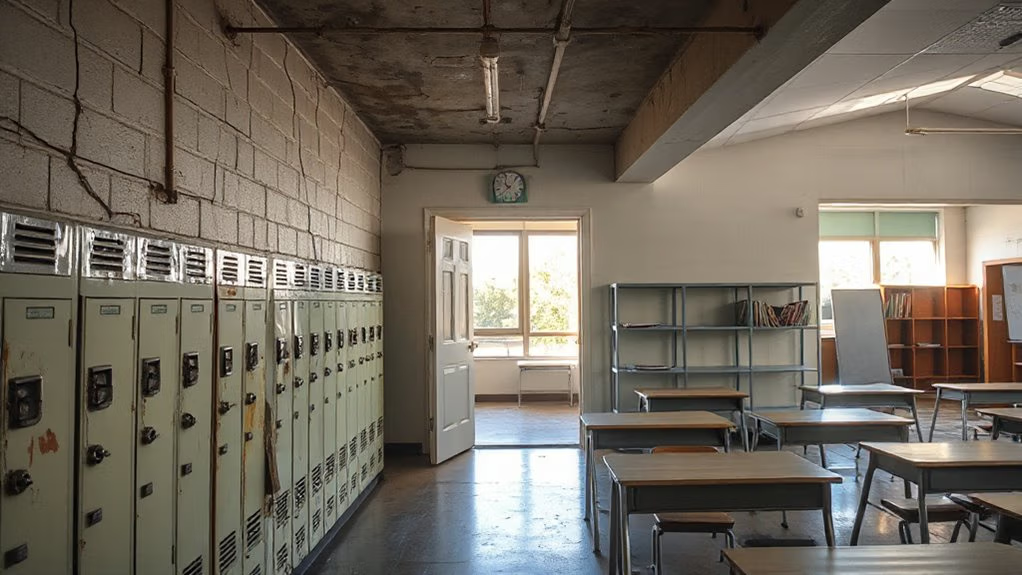
You’ve likely noticed that schools in wealthier neighborhoods have better facilities and more resources than those in poorer communities, and that’s because property tax disparities mean you’re fundamentally funding your child’s school based on your zip code. When districts with lower property values can’t generate the same revenue, you’re watching resource allocation decisions that shortchange students in primarily Black and Latino communities compared to their white peers. These funding gaps compound over decades, creating long-term economic consequences that affect not just graduation rates but lifetime earning potential and generational wealth.
Property Tax Disparities Impact
Because schools in America rely heavily on local property taxes for funding, they’ve become engines of inequality rather than equalizers of opportunity. When you live in a wealthy neighborhood, your property taxes generate robust school budgets. But if you’re in a lower-income community—areas where many communities of color are concentrated due to historical discrimination—your schools struggle with insufficient resources. This creates a vicious cycle: underfunded schools can’t attract experienced teachers or offer advanced programs, which limits students’ futures and keeps property values depressed. You’re fundamentally trapped. Your zip code determines your educational opportunities, which shapes your earning potential and wealth accumulation. Breaking this cycle requires rethinking how we fund schools fundamentally.
Resource Allocation Across Districts
Most school districts don’t receive equal funding, and the disparities aren’t accidental—they’re baked into how we’ve designed the system. When you examine budget allocations, you’ll notice wealthier neighborhoods consistently secure more resources for their schools. This happens because many districts rely heavily on property taxes, meaning affluent areas generate substantially more revenue than economically struggling communities.
You’re seeing the consequences play out in classrooms daily. Under-resourced districts can’t afford updated textbooks, modern technology, or competitive teacher salaries. They’re forced to cut arts programs, counseling services, and extracurricular activities that students desperately need.
This funding gap perpetuates systemic inequality. You’re fundamentally determining a child’s educational quality based on their zip code and their family’s wealth, not their potential or effort.
Long-Term Economic Consequences
When students graduate from under-resourced schools, they’re already behind in ways that compound over decades. You’ll notice how inadequate funding limits their access to Advanced Placement courses, college counseling, and technology—advantages that wealthier districts take for granted.
| Outcome | Impact |
|---|---|
| College enrollment rates | 15% lower from underfunded schools |
| Starting salaries | $8,000-12,000 less annually |
| Lifetime earnings | $500,000+ gap per person |
| Homeownership rates | Considerably reduced |
| Generational wealth | Substantially diminished |
You’re witnessing how these educational gaps translate into reduced earning potential, limited career advancement, and decreased ability to build generational wealth. When you can’t afford higher education or enter professional fields, you’re locked into cycles of economic disadvantage. This isn’t just about individual struggle—it’s systemic inequality perpetuating itself across generations.
Wealth Barriers: Why Homeownership Remains Out of Reach

You’ve likely heard that homeownership builds wealth, yet you might not realize how historical lending discrimination has systematically blocked Black families from accessing mortgages on equal terms. When banks denied loans to qualified borrowers solely based on race—a practice that wasn’t officially outlawed until 1968—you saw generations miss out on building equity while white families accumulated property wealth that they could pass down. Today, you’re witnessing the compounding effects of that exclusion: the median white family holds roughly ten times the wealth of the median Black family, making the down payment for a home feel impossibly far away for many.
Historical Lending Discrimination Patterns
For generations, banks and lending institutions‘ve systematically denied Black Americans access to mortgages—a practice known as redlining that created wealth gaps still visible today.
You’re inheriting the consequences of policies that explicitly blocked homeownership in Black neighborhoods. Here’s how discrimination shaped your financial reality:
- Banks refused mortgages to Black applicants regardless of creditworthiness, reserving homeownership for white families
- Redlined neighborhoods received no investment, causing property values to stagnate while white areas appreciated dramatically
- Your family couldn’t build intergenerational wealth through home equity like white families systematically did
- Today’s racial wealth gap directly traces to these lending practices that compounded across decades
Understanding this history isn’t about blame—it’s about recognizing why you’re fighting different economic battles than your white peers.
Persistent Wealth Gap Effects
Because your parents couldn’t build home equity the way white families did, you’re starting from a fundamentally different financial position today. That inherited disadvantage compounds across generations—generational wealth that white families accumulated through homeownership becomes down payments, college funds, and emergency savings for their descendants.
You’re facing higher mortgage rates, stricter lending requirements, and less inherited capital to leverage. While your peers inherit properties or substantial down payments, you’re saving from scratch. This isn’t about individual effort; it’s about systemic barriers that persist decades after discriminatory policies officially ended.
The wealth gap isn’t abstract—it’s the difference between homeownership and renting, between financial security and financial fragility. Breaking this cycle requires acknowledging how historical discrimination still shapes your economic reality.
How Racism Infiltrates Healthcare and Medical Treatment

Systemic racism doesn’t just live in policies and institutions—it lives in the exam room, the operating theater, and the moment a doctor decides whether your pain is worth treating.
You’ve likely heard stories, but the data confirms what many communities already know. Black patients receive less pain medication than white patients for identical conditions. You’re more likely to be dismissed or labeled as difficult when seeking care. Maternal mortality rates for Black women are three times higher than for white women, even when controlling for income.
Here’s what you’re up against:
- Implicit bias in clinical decision-making affects diagnosis and treatment recommendations
- Underrepresentation of people of color in medical research skews treatment protocols
- Structural barriers limit your access to specialists and quality facilities
- Your lived experiences with discrimination often go unheard in healthcare settings
You deserve better. Healthcare equity requires acknowledging these patterns and demanding change.
Wage Discrimination and Employment Barriers for Workers of Color
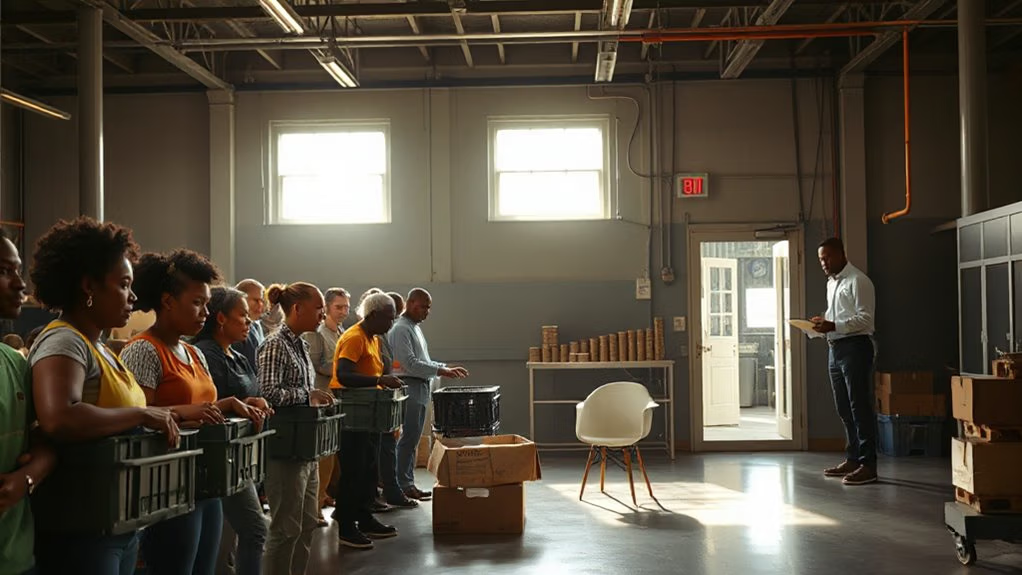
You’ve likely noticed that workers of color often earn less than their white counterparts across virtually every industry, a disparity that compounds over a lifetime of work. When you apply for jobs or seek promotions, you’re maneuvering hiring systems and workplace cultures that frequently favor white candidates, even when you’re equally or more qualified. These aren’t isolated incidents—they’re structural barriers that systematically limit your economic mobility and wealth-building potential.
Pay Gap Disparities Across Industries
When you look at paychecks across America’s workforce, you’ll find a troubling pattern: workers of color consistently earn less than their white counterparts in nearly every industry.
This disparity isn’t random. Here’s what you should know:
- Tech sector gaps – Black and Latino engineers earn 10-15% less than white colleagues doing identical work
- Healthcare inequities – Physicians of color face wage penalties despite identical qualifications and experience
- Finance barriers – Women of color in banking earn notably less at every career level
- Construction realities – Hispanic workers earn roughly 30% less than white workers in similar positions
You’ll notice these gaps compound over careers, affecting retirement savings, home ownership, and generational wealth. Understanding these disparities is your first step toward advocating for meaningful change.
Hiring Discrimination and Advancement Obstacles
Beyond the paychecks themselves, workers of color face barriers that prevent them from even getting hired in the first place or moving up once they’re in the door. You’ve likely heard about résumé studies showing that identical applications get fewer callbacks when they have “ethnic-sounding” names. That’s real, and it’s just the beginning.
Once you’re employed, you’re confronted with the promotion gap. You watch colleagues with similar qualifications advance faster. You’re passed over for leadership roles despite strong performance reviews. You’re underestimated in meetings and your contributions get attributed to others.
These aren’t isolated incidents—they’re systemic patterns that compound over your career. They affect your earning potential, your confidence, and your financial security. Understanding these obstacles is essential to dismantling them.
Generational Poverty: How Inequality Passes Down Through Families
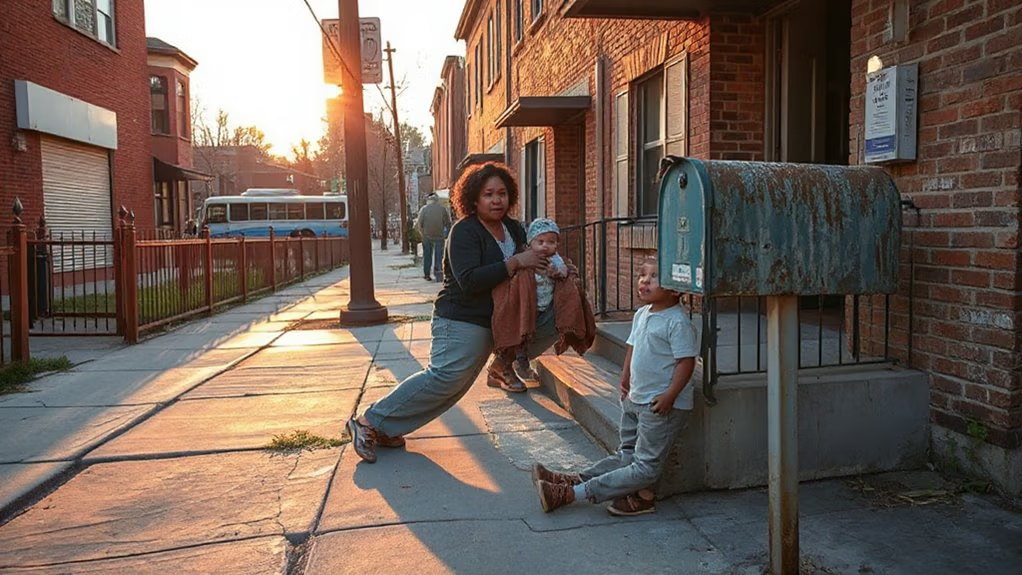
Because poverty concentrates resources and opportunities unequally, it doesn’t just affect individuals—it shapes entire family trajectories across generations. When you’re born into limited means, you’re inheriting more than financial strain; you’re facing systemic barriers that compound over time.
Here’s how inequality perpetuates itself:
- Limited access to quality education restricts your career opportunities and earning potential
- Reduced inherited wealth leaves you without safety nets for emergencies or investments
- Neighborhood segregation concentrates disadvantages and limits your professional networks
- Health disparities create medical debt and missed work opportunities
You might work harder than your wealthier peers, yet still fall behind due to these structural obstacles. Your children inherit these disadvantages too—worse schools, fewer connections, accumulated stress. Breaking this cycle requires intentional intervention, not just individual effort. Understanding generational poverty helps you recognize that racial inequality isn’t about personal choices; it’s about systemic design that you didn’t create but must actively dismantle.
Where Pollution and Race Intersect: Environmental Racism Explained
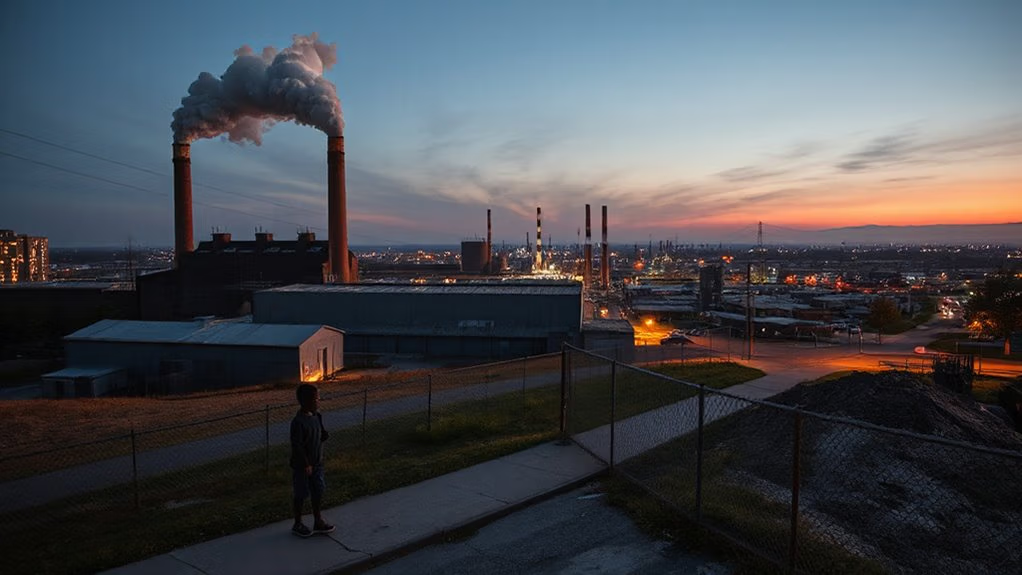
The same systemic forces that trap families in poverty also determine where you’re allowed to live—and that geography isn’t random. If you’re a person of color, you’re statistically more likely to live near highways, industrial plants, and waste facilities. You’re breathing dirtier air, drinking water with higher contamination levels, and facing elevated rates of asthma, lead poisoning, and cancer.
This isn’t coincidence—it’s environmental racism. Decades of discriminatory zoning laws deliberately placed polluting industries in Black and Latino neighborhoods while protecting white, affluent communities. You didn’t choose this location; historical policies did.
The consequences ripple across generations. Children exposed to pollution develop health problems that affect their education, future earnings, and lifespan. Your zip code becomes your destiny, compounding the inequality you inherited. Breaking this cycle requires acknowledging these patterns exist and demanding investment in remediation, regulation, and relocation support for affected communities.
Why Political Representation and Voting Remain Unequal
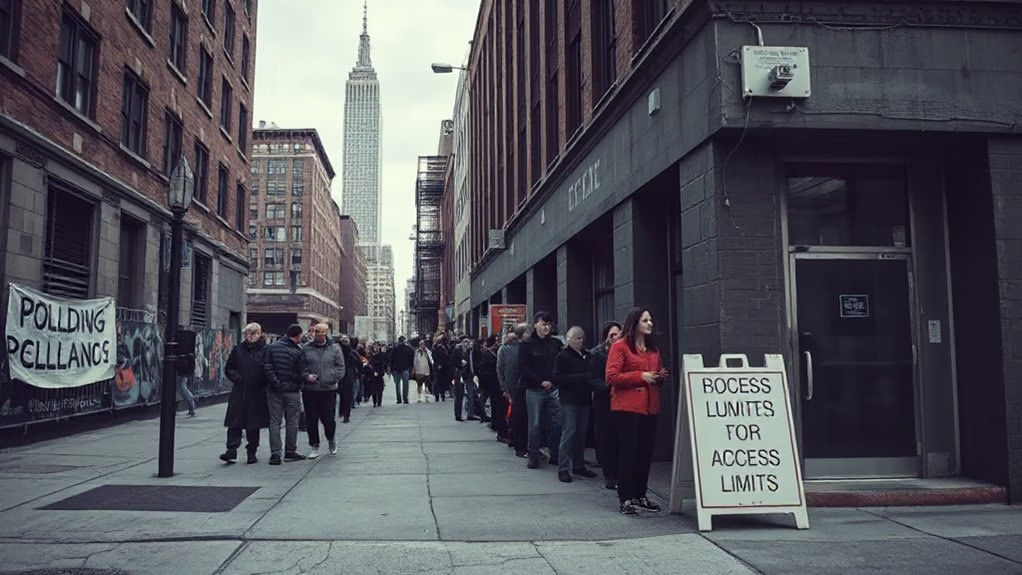
While environmental racism traps you in polluted neighborhoods, political disenfranchisement guarantees your voice stays silent in the rooms where decisions get made.
Your political power faces systematic erosion through multiple mechanisms:
- Voter suppression tactics – Restrictive ID laws, reduced polling locations, and shortened early voting periods disproportionately affect communities of color, making it harder for you to cast ballots.
- Gerrymandering – Districts get redrawn to dilute your voting strength, ensuring your preferred candidates lose despite majority support in your area.
- Underrepresentation in office – You’re vastly outnumbered in legislatures, Congress, and executive positions, meaning your priorities rarely shape policy.
- Wealth-driven access – Campaign finance barriers prevent candidates from your community from running competitive races.
These barriers compound across generations. You’re excluded from decision-making processes affecting your schools, healthcare, and economic opportunities. Real representation requires dismantling these structural obstacles that silence your political voice.
The Data on Policing, Violence, and Racial Bias
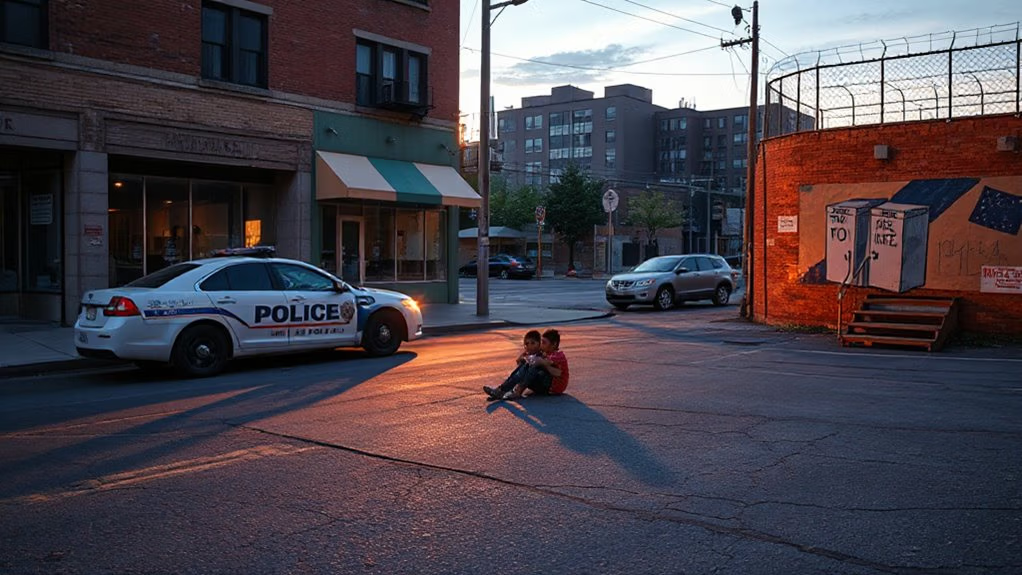
Your political marginalization connects directly to another arena where systemic inequality shapes your daily reality: law enforcement. The data’s stark—Black Americans face police stops at disproportionately higher rates than white Americans, and those encounters escalate to violence more frequently. You’re more likely to be arrested for the same offenses, receive longer sentences, and experience fatal force during routine interactions.
These aren’t isolated incidents but patterns documented across jurisdictions. Studies show racial bias persists even when accounting for crime rates and neighborhood variables. Your neighborhood’s policing intensity often depends on your race, not actual crime levels. Body camera footage and civilian recordings have exposed how officers’ language, aggression, and decision-making shift based on a person’s skin color.
This systemic bias doesn’t exist in isolation—it compounds your political powerlessness, economic disadvantages, and educational barriers, creating an interconnected web of inequality you navigate constantly.
Dismantling Systemic Racism: What Real Change Requires
Because you can’t dismantle what you won’t acknowledge, real change starts with honest reckoning—not just about what’s broken, but about who’s broken it and who benefits from keeping it that way.
You’re facing hard truths: systemic racism isn’t accidental; it’s embedded in institutions you interact with daily. Dismantling it demands more than awareness—it requires action.
Real change requires:
- Accountability mechanisms that hold institutions and individuals responsible for perpetuating inequality
- Resource redistribution that addresses centuries of wealth extraction and economic exclusion
- Policy reform targeting education, housing, criminal justice, and healthcare disparities
- Community leadership centering voices of those most impacted by systemic racism
You can’t outsource this work. Change happens when you’re willing to examine your own complicity, support structural reforms, and sustain commitment beyond trending moments. That’s what dismantling systemic racism actually looks like.
Conclusion
You’ve seen how racism doesn’t just exist in one corner of America—it’s woven throughout our criminal justice, schools, homes, hospitals, and workplaces. You can’t fix what you won’t acknowledge. Real change won’t come from empty promises or surface-level fixes; it demands you examine your own role, support systemic reforms, and stay committed even when progress feels glacially slow. You’re not powerless here. Your choices matter.