You won’t feel high cholesterol creepin’ up on ya—that’s the sneaky part. Most folks don’t know they’ve got it ’til their doctor breaks the news at a checkup. Now, if you’ve got family history of heart trouble or you’re carryin’ extra weight, your risk shoots up considerably. The real telltale signs? Look for yellowish bumps on your skin, a grayish ring around your eyes, or hardened lumps on your Achilles tendon. A blood test‘s your best bet, but there’s plenty more you ought to know about what’s actually goin’ on under the hood.
Key Takeaways
- High cholesterol typically produces no symptoms; blood tests are necessary for detection.
- Xanthomas (yellow bumps on skin and eyelids) are visible cholesterol deposits requiring medical attention.
- Corneal arcus, a grayish ring around the eye, indicates potential cholesterol issues.
- Tendon xanthomas appear as hardened lumps on the Achilles tendon signaling high cholesterol.
- Palmar xanthomas manifest as yellow streaks or creases in the palm requiring evaluation.
Why You Won’t Feel High Cholesterol Coming

While you’re going about your day, your cholesterol’s quietly doing its thing—and you won’t feel a lick of it. That’s the real kicker with high cholesterol—it doesn’t announce itself. You won’t wake up with a headache, chest pain, or any warning sign that’d make you sit up and take notice.
Your arteries could be getting clogged up like a kitchen sink, and you’d be none the wiser. There’s no itching, no tingling, no discomfort whatsoever. Your body won’t send you distress signals because cholesterol buildup happens silently, sneakily, over years and years.
That’s precisely why it’s called a silent killer. You might feel perfectly fine—strong as an ox—while dangerous plaque accumulates in your blood vessels. By the time symptoms actually show up, you’ve often already got serious trouble brewing. The only way to know you’ve got high cholesterol is getting your blood tested.
Family History: Your Biggest Risk Factor

Here’s the thing—if your folks had high cholesterol, there’s a pretty good chance you’ve inherited more than just their stubborn streak or your mama’s smile.
Genetics play a mighty powerful role in determining your cholesterol levels. You can’t outrun your family tree, no matter how hard you try. If your parents or grandparents battled high cholesterol, your risk climbs considerably. Some folks inherit a condition called familial hypercholesterolemia, which means their bodies can’t process cholesterol properly—it’s baked right into their DNA.
That doesn’t mean you’re doomed, though. Knowing your family history arms you with essential information. You’ll want to get your cholesterol checked regularly, especially if relatives had heart disease or strokes. Talk to your doctor about your family’s medical background. Early knowledge lets you take preventative steps now, potentially dodging the health troubles that caught your kin off guard.
Diet and Exercise Habits Raising Your Cholesterol

You’re likely raisin’ your cholesterol without even knowin’ it—those saturated fats you’re consumin’ and that sedentary lifestyle you’ve settled into are workin’ against your heart somethin’ fierce. Between the processed foods you’re grabbin’ on the go and the couch time you’re spendin’, you’re creatin’ a perfect storm for high cholesterol that’ll sneak up on ya. The good news is you’ve got the power to turn this ship around by makin’ some real changes to how you eat and move.
Saturated Fat Consumption Impact
When you’re diggin’ into those buttery biscuits and fatty cuts of meat day after day, your cholesterol levels don’t stand a chance of stayin’ in the healthy range. See, saturated fats act like trouble-makers in your bloodstream, raisin’ your LDL cholesterol somethin’ fierce. You’re talkin’ about cheese, whole milk, bacon, and them marbled steaks that taste mighty good but pack a wallop for your arteries.
Your body actually needs some fat, but when you’re overloadin’ on the saturated kind, you’re settin’ yourself up for problems. Those clogged arteries don’t happen overnight—they creep up gradual-like. Start swappin’ butter for olive oil, choose leaner meats, and you’ll notice your cholesterol numbers improvin’ real quick.
Sedentary Lifestyle Consequences
Sittin’ on the couch day after day while your cholesterol creeps upward is like watchin’ a slow-motion train wreck—you know it’s happenin’, but you’re not doin’ much to stop it. When you’re idle, your body ain’t burnin’ the calories and fats that’d otherwise get processed. Your arteries start collectin’ buildup like rust on old machinery.
| Activity Level | Cholesterol Impact |
|---|---|
| Sedentary | Increases LDL notably |
| Light movement | Modest improvement |
| Moderate exercise | Reduces LDL noticeably |
| Vigorous activity | Raises HDL greatly |
| Consistent routine | Maintains healthy levels |
You don’t need fancy gyms or marathon trainin’. A daily walk, some yardwork, or dancin’ in your kitchen gets your heart pumpin’ and your metabolism movin’. Your body’s designed for motion, not stillness. Start movin’ today.
Processed Food Intake Effects
Every time you reach for that bag of chips or grab a drive-thru burger, you’re feedin’ your cholesterol problem faster than you can say “artery clog.” Processed foods—loaded with trans fats, saturated oils, and sodium—don’t just sit idle in your stomach; they go straight to work raisin’ your LDL cholesterol while knockin’ down the good HDL your body needs. You’re fundamentally openin’ the floodgates to cardiovascular trouble. Those convenient frozen dinners and sugary snacks? They’re sneaky culprits packin’ more damage than you’d reckon. When you swap whole foods for processed alternatives, you’re choosin’ a path lined with inflammation and arterial buildup. Your heart’s countin’ on you to make better choices at the grocery store.
Age, Gender, and Medical Conditions That Increase Risk
You’re gonna find that your age and gender play a mighty big role in how your cholesterol behaves, and there’s no gettin’ around it. As you get older, your body naturally tends to hold onto more cholesterol, and women’s risk climbs considerably after menopause when estrogen takes a backseat. Now, if you’ve got certain health conditions like diabetes or heart disease runnin’ in your family, you’re facin’ an uphill battle that’ll require extra attention to keep things in check.
Age-Related Risk Factors
As we get older, our bodies don’t always cooperate the way they used to, and cholesterol‘s one of those sneaky culprits that creeps up on us. Once you hit your fifties and sixties, your risk shoots up considerably, especially if you’re a man before sixty or a woman past menopause.
See, your hormones shift with age, and that protective estrogen women had? It starts dwindling. Men don’t get that same buffer, so they’re vulnerable earlier on.
Now, if you’ve got diabetes, high blood pressure, or heart disease running in your family tree, you’re playing with fire. These conditions gang up on your cholesterol levels, making things messier. That’s why your doctor keeps pushing those check-ups. Don’t ignore ’em—catching this early saves your hide.
Gender Differences in Cholesterol
Why do men and women catch high cholesterol at different times in their lives? Well, here’s the thing—your hormones play a mighty big role in the story.
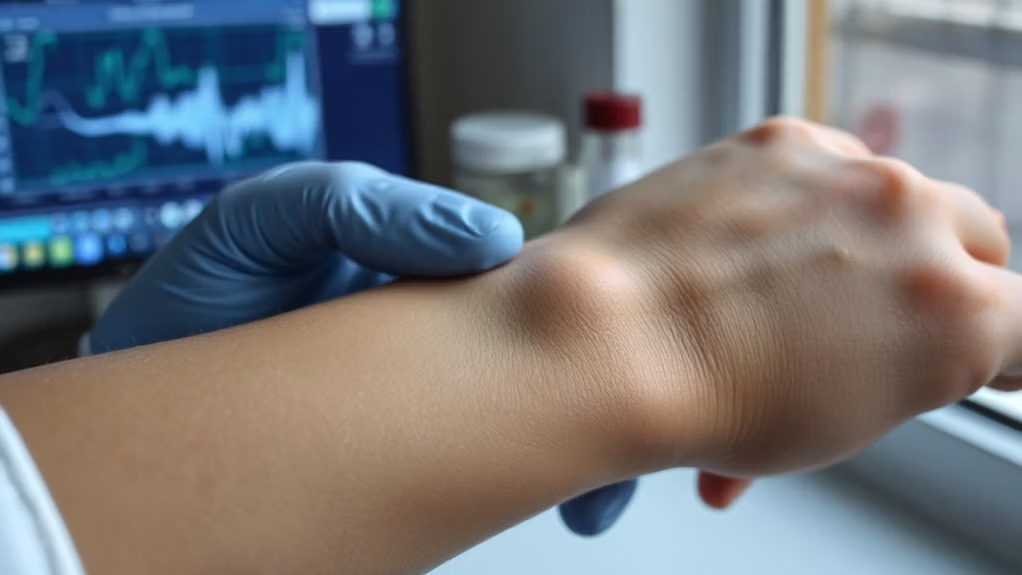
You fellas tend to face higher cholesterol risks earlier, especially once you hit middle age. For you ladies, estrogen’s been your natural protector all these years, keeping those cholesterol levels in check. But when menopause rolls around, that hormonal shield drops away, and your cholesterol can climb faster than kudzu up a fence post.
Men typically see concerning numbers in their 40s and 50s, while women often don’t face similar risks until their 60s and beyond. That doesn’t mean you can sit idle, though. Both genders need regular checkups and healthy habits to keep cholesterol from sneaking up on you.
Visible Warning Signs: Xanthomas, Corneal Arcus, and Tendon Bumps
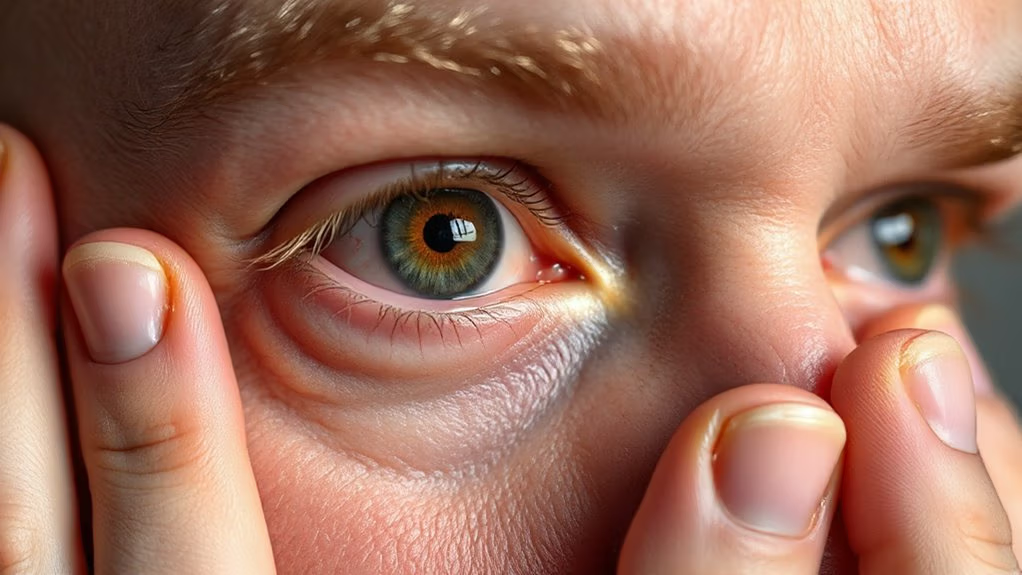
When high cholesterol’s been buildin’ up in your body for a while, it’ll sometimes show itself through telltale marks on your skin and eyes that you can actually see in the mirror. These visible signs are your body’s way of waving a red flag.
| Sign | What It Looks Like |
|---|---|
| Xanthomas | Yellow bumps on eyelids, elbows, knees |
| Corneal Arcus | White or gray ring around iris |
| Tendon Xanthomas | Hard lumps on Achilles tendon |
| Palmar Xanthomas | Creases in palm with yellow streaks |
| Tuberous Xanthomas | Firm nodules on elbows and knees |
You’ll notice xanthomas—those yellowish deposits—clusterin’ around your eyelids and joints. A corneal arcus appears as a grayish ring circlin’ your eye’s colored part. Tendon bumps show up as hardened lumps on your Achilles tendon, makin’ movement uncomfortable. Don’t ignore these physical warnings; they’re signallin’ that your cholesterol needs immediate attention.
How Weight Directly Affects Your Cholesterol Numbers
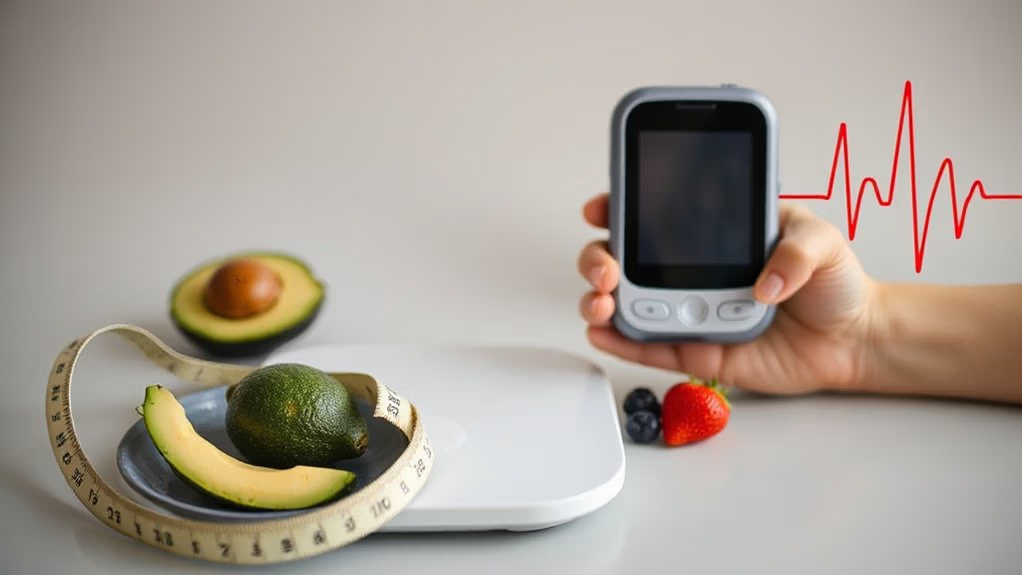
Your body weight and cholesterol levels are hitched together like a two-horse wagon—one pulls on the other, and they’re bound to move in the same direction. When you pack on extra pounds, your liver ramps up production of LDL cholesterol, the harmful kind that clogs your arteries. Meanwhile, your HDL cholesterol—that good stuff protecting your heart—drops like a stone.
Here’s the kicker: excess weight, especially around your belly, triggers inflammation throughout your body. That inflammation cranks up your triglycerides something fierce. You’re basically creating a perfect storm for heart disease.
The good news? You don’t need to become a marathon runner. Shedding even ten percent of your body weight can meaningfully shift your cholesterol numbers in the right direction. Your liver responds quickly to weight loss, producing less LDL while your HDL bounces back up. It’s one of the most powerful levers you’ve got for taking control of your heart health.
Which Blood Tests Your Doctor Should Order
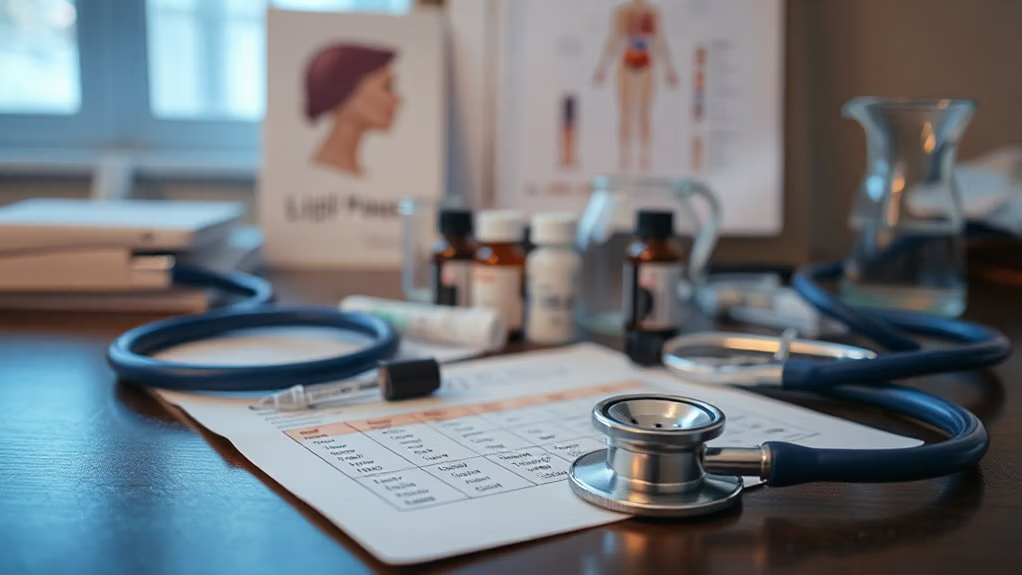
A roadmap’s only useful if you can read it, and that’s exactly what a cholesterol panel does—it shows you where you stand. Your doctor should order what’s called a lipid panel, which breaks down your total cholesterol, LDL (the bad stuff), HDL (the good stuff), and triglycerides. Don’t skip this test—it’s your window into what’s really happening in your arteries.
You’ll want this panel done after you’ve fasted for nine to twelve hours, so your numbers stay honest. Most folks should get tested every four to six years if you’re in decent health, but if you’re carrying extra weight or have family history of heart trouble, ask your doc about testing more often.
This simple blood draw tells you everything you need to know about your heart’s future.
The Specific Foods and Eating Patterns to Avoid
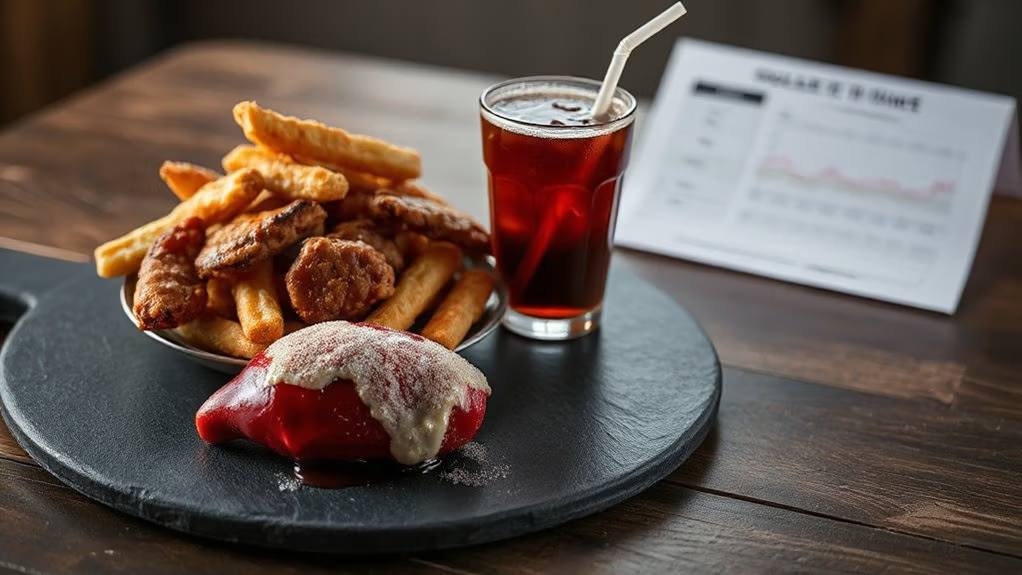
Since you’ve now got that lipid panel showing you what’s really going on in your arteries, it’s time to talk about what you’re putting on your plate—because here’s the truth: you can’t out-test a bad diet.
Your eating habits matter more than you might think. You’re gonna want to steer clear of:
- Saturated fats found in fatty cuts of meat, butter, and full-fat dairy
- Trans fats hiding in processed snacks, baked goods, and fried foods
- Refined carbohydrates like white bread, sugary cereals, and pastries
- Processed meats such as bacon, sausage, and deli turkey
Rather than viewing this as deprivation, think of it as trading in old habits for ones that’ll actually serve your heart. You’ve got the knowledge now—time to put it to work at mealtime.
When High Cholesterol Signals a Larger Health Problem
Sometimes high cholesterol isn’t just knocking on the door of heart disease—it’s signaling that something bigger’s already going on under the hood. You see, elevated cholesterol often works hand-in-hand with other conditions you might not’ve noticed yet.
High cholesterol often signals something bigger’s already happening—it rarely works alone beneath the surface.
If you’re dealing with high cholesterol alongside diabetes, you’re looking at a double threat to your arteries. Thyroid problems can mess with your cholesterol levels too, so don’t overlook that connection. Kidney disease tends to raise cholesterol as your body struggles to filter properly.
Watch for signs that your cholesterol’s part of a larger picture: unexplained weight gain, persistent fatigue, or swelling in your legs. These symptoms suggest your body’s fighting multiple battles at once.
That’s why getting proper testing matters. Your doctor can spot patterns you’d miss alone, identifying whether your cholesterol’s truly standalone or waving a flag for something more serious brewing underneath.
What to Do Now: Testing, Medication, and Monitoring
Now that you understand what high cholesterol‘s telling you, it’s time to take action. Don’t put it off, friend—your heart’s counting on you.
Start by getting tested. Your doctor’ll run a simple blood test that shows your cholesterol levels plain as day. Here’s what comes next:
- Schedule that appointment this week, not next month
- Get your numbers—total cholesterol, LDL, HDL, and triglycerides
- Talk honestly with your doc about medication options if needed
- Plan check-ups every few months to track your progress
Depending on your results, your doctor might prescribe statins or other medications to bring those numbers down. Don’t fight it—these drugs work. You’ll also need to monitor regularly through follow-up tests and lifestyle changes. Keep a food diary, move your body daily, and stay the course. Your future self’ll thank you for taking this seriously today.
Conclusion
You’ve gotta get yourself going on this journey, friend. Don’t delay or dilly-dally with your doctor’s visit—you’ll want those essential vital signs checked soon as you can. Start slicing out the sinful saturated fats, and swap ’em for smarter selections. Your heart’s hollering for help, and you’re the hero of this health story. Take these truths to heart, tackle this trouble head-on, and you’ll be trending toward terrific health in no time flat.