Your transmission’s sending you distress signals, and you’d better listen up. You might notice a burnt smell creeping under your car or spot reddish fluid pooling beneath it. Your gears could grind or hesitate when shifting. Maybe your engine revs while your car just sits there. Strange noises—whining, humming, or clunking—might fill your ears. That check engine light? It’s waving at you too. These warning signs aren’t accidents; they’re your transmission’s cry for help before things get really expensive.
Key Takeaways
- Burning smell or reddish fluid leaks under your car indicate overheated or leaking transmission fluid requiring immediate attention.
- Delayed gear shifts or grinding noises suggest worn internal parts, clutch plates, or low transmission fluid levels.
- Engine revving without forward movement or sudden acceleration hesitation signals transmission slipping from fluid loss or internal damage.
- Check engine light or transmission warning lights may indicate sensor failures, solenoid malfunctions, or fluid contamination issues.
- Whining, humming, or clunking noises from the transmission suggest low fluid, worn bearings, or severe internal damage.
Burning Smell or Fluid Leaks Under Your Car

A burnt smell wafting from under your hood is your car’s way of waving a red flag. That acrid odor typically signals overheated transmission fluid, which means your transmission’s struggling to do its job. You shouldn’t ignore it.
Similarly, if you spot reddish or brownish fluid pooling beneath your parked car, your transmission’s likely springing a leak. Transmission fluid’s essential for keeping everything lubricated and cool inside that complex system. Without adequate fluid levels, your transmission heats up dangerously and wears down faster than it should.
Both signs warrant immediate attention. A small leak today becomes a major breakdown tomorrow. Don’t procrastinate on getting your vehicle checked by a trusted mechanic. Catching these warning signs early can save you thousands in costly repairs down the road.
Delayed or Grinding Gear Shifts

When you shift gears and feel that telltale grinding noise or notice your transmission hesitates before engaging, you’re witnessing one of the clearest signs something’s gone wrong inside.
That delay between pressing the pedal and feeling the gear catch? That’s your transmission struggling to do its job. It’s like your car’s hesitating, unsure whether it wants to cooperate. Grinding sounds mean internal parts are clashing together—metal on metal—which shouldn’t happen in a healthy transmission.
That delay between pedal and gear catch means your transmission is struggling—grinding sounds signal internal metal-on-metal clashing.
Here’s what you’re really dealing with:
- Worn clutch plates that can’t grab properly, causing that frustrating lag
- Low transmission fluid making it harder for gears to shift smoothly
- Damaged synchronizers that normally coordinate gear engagement
Don’t ignore these signals. Delayed shifts often precede complete transmission failure. The sooner you get it checked, the better your chances of catching problems early and avoiding a costly rebuild.
Transmission Slipping or Loss of Power

If your transmission’s slipping, you’ll notice your engine revving up while your car barely moves forward—like you’re pressing the gas pedal on a treadmill that’s barely moving. This happens when your transmission can’t maintain a firm grip on the gears, causing power loss between your engine and wheels.
You might experience sudden acceleration hesitation, a burning smell from under the hood, or a whining noise that gets worse when you’re driving uphill. Sometimes your car lurches unexpectedly or struggles to climb even gentle inclines.
This issue typically stems from low transmission fluid, worn friction materials, or internal damage. Don’t ignore it—transmission slipping worsens quickly and can leave you stranded. Get your fluid level checked first; it’s the simplest culprit. If that’s not the problem, have a mechanic inspect your transmission immediately. Delaying repairs only multiplies your costs and safety risks.
Your Check Engine Light or Transmission Warning Comes On
Why’s that little light on your dashboard glowing like a tiny warning beacon? When your check engine light flickers on, your transmission might be crying for help. That little bulb’s connected to your vehicle’s diagnostic system, which reads trouble codes your transmission’s sending out.
Your check engine light is your transmission’s way of signaling trouble—get it diagnosed before costly damage occurs.
Here’s what you need to know:
- Sensor failures trigger warning lights when transmission fluid pressure drops or temperature spikes beyond normal ranges, signaling internal problems you can’t see yet.
- Solenoid malfunctions prevent proper fluid flow through your transmission, causing the system to detect shifting delays and gear engagement issues.
- Fluid degradation activates alerts when contaminated or burnt transmission fluid loses its ability to lubricate and cool components effectively.
Don’t ignore that glow. Get your vehicle scanned by a mechanic right away. Catching transmission trouble early saves you thousands in repairs down the road.
Transmission Noises: Whining, Humming, or Clunking
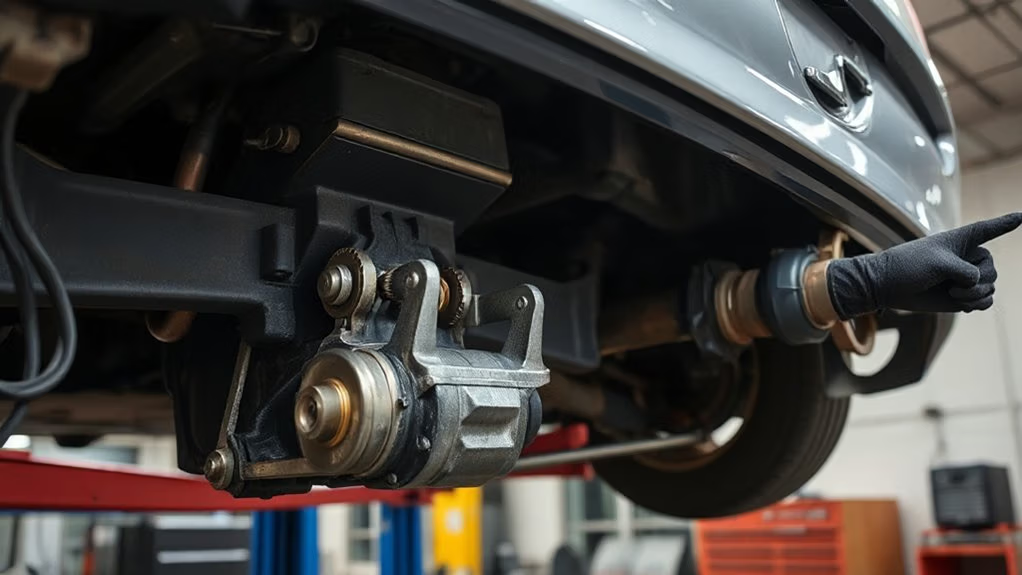
Your transmission’s trying to talk to you through sounds you can’t ignore. When you hear whining noises, especially during acceleration, that’s often low transmission fluid or worn bearings crying out for help. Humming sounds that change pitch with engine speed? That’s typically a sign of internal damage or contamination in your fluid.
Clunking noises are the serious alarm bells. They usually mean worn engine mounts, broken transmission mounts, or severe internal damage like damaged gears or bearings. Don’t brush these off as normal car sounds.
Pay attention to *when* these noises happen—during shifts, while idling, or when you’re accelerating. Location matters too. Is it coming from under your car or inside the cabin?
Trust your ears here. Your transmission’s sending you a message, and ignoring it’ll cost you thousands in repairs down the road. Get it checked out soon.
Conclusion
When you’re cruising down the highway and your transmission starts acting up, it’s like your vehicle’s crying out for help. Those warning signs—the burnt-smell clouds, the grinding gears, that stubborn check engine light—they’re all red flags you can’t ignore. Don’t wait until you’re stranded on the roadside with an empty wallet. Get your car checked now, and you’ll save yourself a whole heap of trouble down the road.