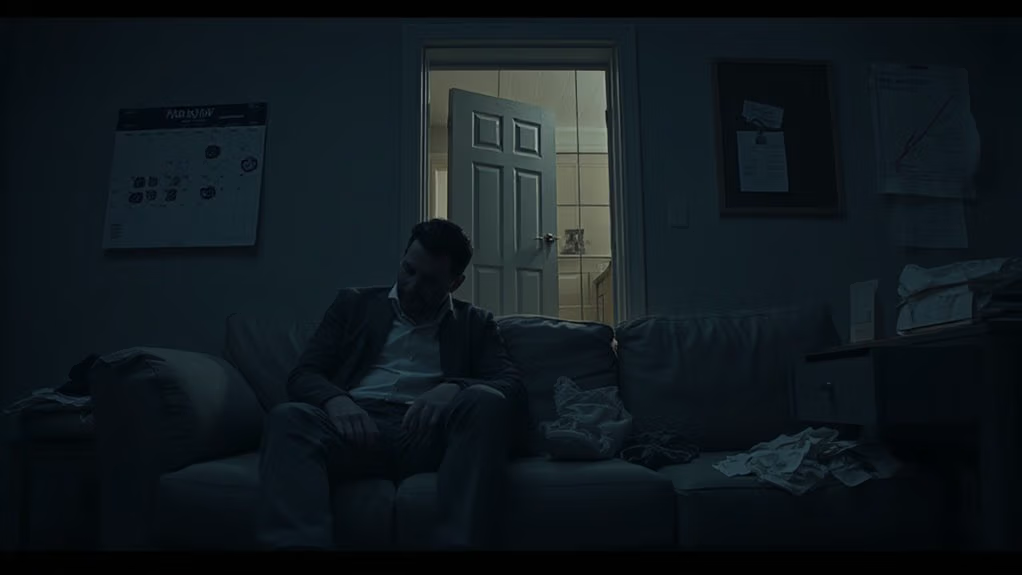
You’re caught in a controlling relationship if you’re constantly checking in, watching every word you say, or asking permission for simple moves. Your partner monitors your phone, isolates you from loved ones, and uses jealousy as a weapon. Financial strings keep you dependent. Criticism’s relentless, expectations shift without warning, and threats loom when you don’t comply. These patterns don’t exist in isolation—they’re threads in a tapestry designed to trap you. Understanding how they weave together reveals what’s really happening.
Key Takeaways
- Constant monitoring of phone activity, location, and whereabouts masquerades as care but reflects a lack of trust.
- Criticism of friends and family creates isolation, reducing access to outside perspectives and support systems.
- Extreme jealousy and accusations over interactions exhaust you and chip away at self-confidence and independence.
- Financial control through income isolation and spending restrictions prevents autonomy and creates dependency on the partner.
- Unpredictable criticism and shifting expectations keep you anxious, apologizing for non-faults to maintain peace and prevent outbursts.
Constant Monitoring and Surveillance

Have you ever noticed how your partner seems to know where you’re going before you’ve even told them? That’s when alarm bells should start ringing.
Constant monitoring often creeps in gradually. First, they’re checking your phone. Then they’re tracking your location through apps or demanding hourly check-ins. They’ll quiz you about where you’ve been, who you saw, and what you talked about. You’ll find yourself justifying simple errands or feeling guilty for wanting privacy.
Constant monitoring starts small—checking your phone, tracking your location, demanding hourly updates—until you’re justifying every movement.
This surveillance isn’t about love—it’s about control. When someone trusts you, they don’t need a GPS tracker on your car or access to your passwords. They don’t interrogate you after you’ve spent time with friends or family.
You’re allowed to have your own space and movements without explanation. If you’re constantly reporting back and feeling watched, you’re not in a relationship built on trust. You’re in one built on fear.
Isolation From Friends and Family

When your partner starts subtly discouraging you from seeing the people you love, it doesn’t feel like control at first—it feels like preference.
Maybe they’re critical of your best friend. Perhaps they conveniently schedule plans when you’d normally visit family. You find yourself explaining your whereabouts constantly, checking in more often than feels natural. Before long, you’re declining invitations just to avoid the conflict.
This isolation isn’t accidental. It’s a calculated tactic that leaves you dependent and vulnerable. When you’re cut off from your support system, you’ve got nowhere to turn for perspective or help.
Watch for these warning signs:
- Constant criticism of your loved ones
- Guilt-tripping when you want to see friends
- Creating emergencies that interrupt your plans
- Making you feel unwelcome around family
Your relationships matter. Trust your instincts when someone tries to diminish them.
Extreme Jealousy and Accusation
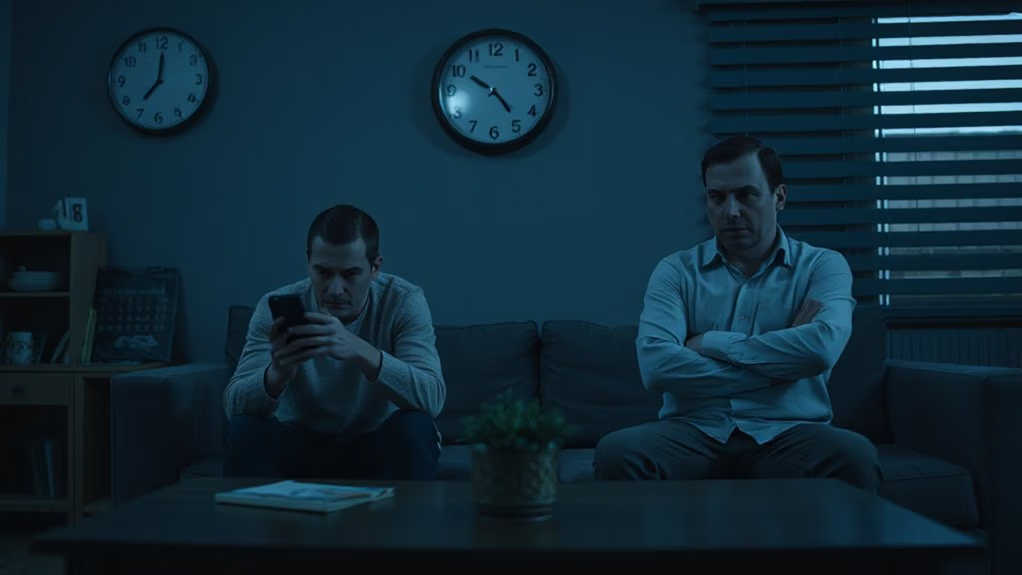
Your partner keeps tabs on who you’re texting, what you’re wearing, where you’ve been—and they’re convinced you’re always up to something. They’ll accuse you of flirting when you’re simply being friendly, or suggest you’re hiding something when you mention a coworker’s name.
This jealousy isn’t flattering—it’s exhausting. You find yourself constantly defending yourself, explaining innocent interactions, or editing what you say to avoid triggering suspicion. Maybe you’ve stopped mentioning people altogether just to keep the peace.
Here’s the thing: healthy partners trust you until you give them reason not to. They don’t need hourly check-ins or detailed explanations about your day. Extreme jealousy and accusation stem from insecurity, not love. It creates an atmosphere where you’re perpetually guilty of something you didn’t do, walking on eggshells to manage their emotions rather than building genuine trust together.
Financial Control and Dependency
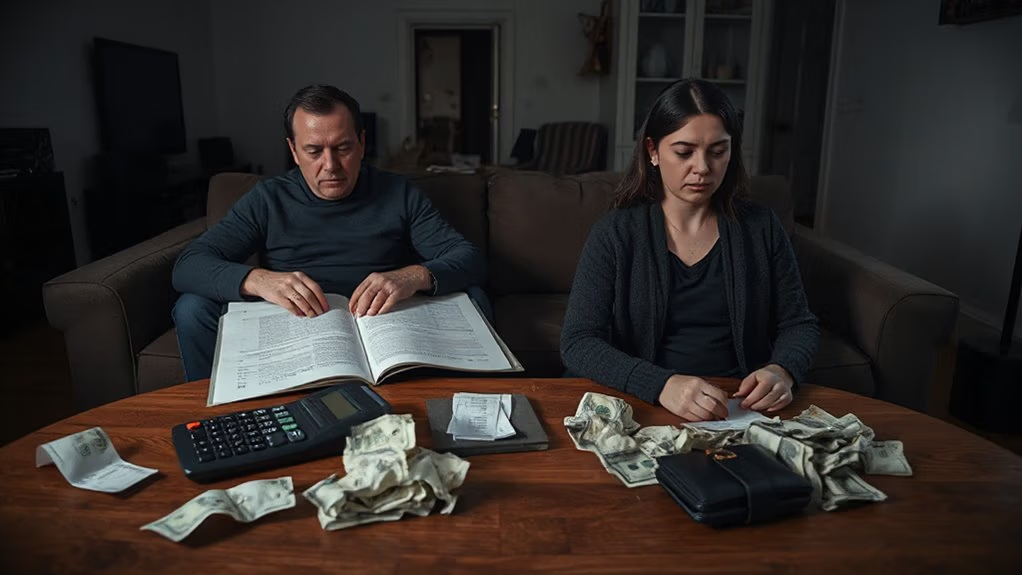
When someone’s controlling you through money, they’re often isolating your income and assets so you can’t make independent choices. You might find yourself asking permission just to spend your own paycheck, or they’re restricting your access to accounts and credit cards until you’re completely dependent on them. Before you know it, they’ve saddled you with debt in your name or created obligations that keep you tied to them, making it nearly impossible to leave.
Isolating Income and Assets
Money’s got a funny way of revealing who someone really is, and in controlling relationships, it often becomes the primary tool for keeping a partner trapped.
When your partner isolates your income and assets, you’re not just losing financial independence—you’re losing your escape route. Here’s what that looks like:
- Your paycheck goes directly to their account, leaving you asking for allowance money
- They hide bank accounts, investments, or property ownership from you entirely
- You’re forbidden from working or they sabotage your job opportunities
- Debt gets accumulated in your name while they control the assets
This financial stranglehold leaves you dependent and powerless. You can’t leave because you’ve got nothing to your name. That’s precisely the point. Recognition matters here—seeing this pattern is your first step toward reclaiming control.
Restricting Access to Money
Even when you’ve got money sitting in an account, it doesn’t mean you can actually use it. Your partner might require you to ask permission before withdrawing cash, or they’ll claim joint accounts are “theirs” to manage. They’ll scrutinize every purchase, demanding receipts and explanations for ordinary expenses.
You might find yourself handed an allowance—like a child—despite contributing income. They’ll withhold access to credit cards or bank information, leaving you financially blind and dependent. Some partners’ll drain accounts without warning or refuse to pay bills unless you comply with their demands.
This control suffocates your autonomy. You can’t buy groceries without approval or handle emergencies independently. It’s isolation disguised as partnership, leaving you trapped and powerless.
Creating Debt and Obligations
A controlling partner‘s got another trick up their sleeve—they’ll deliberately entangle you in debt or create situations where you’re obligated to them financially.
You might notice patterns like:
- Taking out loans in your name without permission, leaving you responsible for payments
- “Lending” you money then holding it over your head during arguments
- Making expensive purchases they expect you to pay for later
- Creating emergencies that require your financial rescue, building guilt-based dependency
When you’re drowning in obligations you didn’t choose, you can’t leave easily. That’s exactly what they’re counting on. You’re trapped by financial chains they forged, unable to stand on your own two feet. Understanding this pattern helps you recognize the trap before it tightens around you.
Relentless Criticism and Nitpicking

You’ve probably noticed your partner finds fault with nearly everything you do—how you fold laundry, cook dinner, or spend your paycheck—and no matter how hard you try, you can’t seem to meet their standards. They’ll praise you one moment, then shift the expectations entirely, leaving you chasing a moving target that’ll never stay still. This constant barrage of criticism and nitpicking wears you down, making you second-guess yourself and cling to their approval like it’s the only thing keeping you afloat.
Nothing You Do Is Right
When someone’s constantly finding fault with how you load the dishwasher, fold the laundry, or say hello to their mother, it wears you down in ways that aren’t always obvious at first.
You’re walking on eggshells, aren’t you? That relentless criticism chips away at your confidence until you’re second-guessing every decision. Here’s what this looks like:
- You apologize for things that aren’t your fault
- You freeze up before sharing ideas or opinions
- You feel anxious about everyday tasks
- You start believing their criticism’s actually justified
This pattern isn’t about standards—it’s about control. A partner who finds fault in everything you do isn’t pushing you toward improvement. They’re keeping you small, dependent on their approval. You deserve someone who sees your effort, not just your flaws.
Constant Verbal Put-Downs
While constant criticism wears you down quietly, verbal put-downs do their damage out loud. Your partner belittles you in front of friends, mocks your appearance, or dismisses your ideas as stupid. They’ve got a sharp comment ready for everything you say or do—how you dress, your job, your family, your dreams.
You start believing them. You second-guess yourself constantly, wondering if you’re actually as foolish as they claim. That’s exactly what they want. By chipping away at your confidence through relentless jabs, they’re keeping you small and dependent. You become so focused on proving yourself worthy that you lose sight of your own value.
This isn’t normal disagreement. It’s systematic degradation designed to control you.
Moving The Goalposts Always
No matter what you do, it’s never quite right—and that’s the whole point. Your partner shifts expectations like sand through your fingers, leaving you perpetually chasing approval you’ll never catch.
You’ve likely experienced this pattern:
- You clean the house, but they say you missed spots or did it wrong
- You accomplish something at work, yet they minimize it or find fault
- You make plans together, then they suddenly change the rules mid-conversation
- You apologize sincerely, but it’s deemed insufficient or insincere
This isn’t accidental forgetfulness. It’s calculated control. By constantly moving the goalpost, they keep you off-balance, desperate to please, and doubting your own judgment. You’re trapped in an exhausting cycle where winning becomes impossible. Recognizing this pattern is your first step toward reclaiming your peace.
Threats and Intimidation Tactics

Because fear’s a powerful tool, controlling partners often weaponize it—they’ll threaten to leave you, take your kids, or hurt themselves if you don’t bend to their will. You’re left walking on eggshells, constantly calculating how to prevent the next outburst.
Controlling partners weaponize fear through threats—of leaving, custody loss, or self-harm—leaving you perpetually walking on eggshells.
These threats aren’t idle. They’re calculated moves designed to keep you compliant and small. A partner might punch walls near your face, drive recklessly while you’re in the car, or promise to destroy things you love. The message is clear: comply or face consequences.
You might notice yourself apologizing for things that aren’t your fault, just to restore peace. You’re fundamentally negotiating with someone who’s already decided the terms. That’s not a relationship—that’s captivity dressed up in familiar clothes.
Recognizing this pattern is your first step toward freedom.
Recognizing the Pattern: How These Signs Connect

You’ve likely noticed that controlling behaviors don’t show up in isolation—they’re threads woven together into a tapestry of control.
When you step back and look at the whole picture, you’ll see how these patterns reinforce each other. Isolation feeds isolation. Criticism plants seeds of doubt that make threats land harder. Here’s what to watch for:
- Escalation over time — what starts as comments becomes criticism, then control
- Calculated timing — your partner weaponizes threats right after you’ve been cut off from support
- Emotional manipulation — they use your vulnerabilities against you systematically
- Normalized abuse — what seemed shocking becomes your everyday reality
The real danger isn’t any single behavior—it’s recognizing how they stack together. When you see this pattern clearly, you’re no longer gaslit into thinking you’re overreacting. You’re simply naming what’s actually happening.
Conclusion
You’ve got to understand that controlling relationships don’t announce themselves like a storm rolling in—they creep up like fog, slowly blocking your view of who you are. When you spot these signs weaving through your days, trust that gut feeling whispering you’re not quite yourself anymore. You’ve still got time to find your way back to the light. Reach out, tell someone, and remember: you deserve better than this.