
The shaggy dough starts out sticky and slack; it spreads like a thick puddle in the bowl. After a few folds, it tightens up, turns smoother, and begins to puff as it holds air.
So, how many times should you stretch and fold sourdough? For most loaves of sourdough bread, we aim for 3 to 4 sets during the first 1 to 2 hours of bulk fermentation, spaced about 20 to 30 minutes apart. That schedule builds dough strength without beating up the dough, which helps us get better rise and a cleaner shape.
Still, the right number isn’t fixed. A wet, high-hydration dough often needs more sets, while strong bread flour may need fewer. Room temp matters too, warm kitchens move faster, so the dough can feel ready sooner.
In this post, we will show how to adjust based on feel, hydration, flour type, and temperature, so we stop folding right when the dough turns elastic, airy, and steady with the no-knead technique.
A clear baseline, how many times we stretch and fold in most sourdough recipes
 Photo by AI Generated
Hands building dough strength with a simple stretch-and-fold during early bulk fermentation, created with AI.
Photo by AI Generated
Hands building dough strength with a simple stretch-and-fold during early bulk fermentation, created with AI.
When we ask, “how many times should we stretch and fold sourdough bread”, we are usually looking for a simple baseline we can trust. Most of the time, that baseline is 3 to 4 sets, done early in bulk fermentation. It is enough work to build strength, while still letting the dough stay airy and calm during its bulk rise later.
Think of early bulk like setting posts in concrete. We do the work up front, then we stop messing with it so it can rise.
The simple answer for most dough, 3 to 4 sets early in bulk
For most sourdough recipes, we aim for 3 to 4 full sets during the first 1 to 2 hours of bulk fermentation. That early window matters because it helps strengthen the gluten faster then, and the dough still needs support. Later, once the dough starts holding air, we want to handle it less.
A “set” is simple. It usually means we go around the bowl and do four folds in the bread dough:
- We stretch the dough on one side up until it resists, then fold it over the center.
- We rotate the bowl and repeat until we have done all four sides.
Each set takes under a minute once we get the hang of it. The rest of bulk is mostly waiting and watching.
If we keep folding deep into bulk, we can knock out the gas we worked to build. So, we earn our strength early, then we let the dough do its job.
After the last early set, we should feel the dough turn smoother and hold its shape better.
An easy timing plan, one set every 30 minutes
A steady rhythm keeps us from overthinking. We like one set every 30 minutes, because that rest time lets the gluten relax. If we fold too soon, the dough fights back. If we wait too long early on, the dough can stay weak and spread out.
Here are two easy timelines that fit most home kitchens.
Timeline A: 3 sets (common for moderate hydration doughs)
- 0:30: Set 1
- 1:00: Set 2
- 1:30: Set 3
Timeline B: 4 sets (great for wetter, slacker doughs)
- 0:30: Set 1
- 1:00: Set 2
- 1:30: Set 3
- 2:00: Set 4
Between sets, we leave the dough covered and still. That quiet time is not wasted time. The dough loosens, then each next fold stacks strength on top of strength.
If we need a quick refresher on the hand motion, this step-by-step guide is a clear reference: stretch and fold photo tutorial.
Why we fold early, stronger gluten, better rise, easier shaping
Early folding is like building a net before we try to catch anything. With each set, we line up gluten strands so they can trap gas. As a result, the dough rises higher and keeps its shape instead of spreading wide.
Here is what we notice at the counter when we get those early sets right:
- Stronger gluten development: The dough changes from shaggy to smooth. It starts to pull off the bowl cleaner.
- Better rise and oven spring: The dough holds more air for an open crumb, so the loaf stands taller in the oven.
- Less stickiness: It still feels tacky, but it stops smearing and tearing as much.
- More even fermentation: Folding moves warmer dough from the outside to the center, so the whole mass ferments at a similar pace.
- Less kneading needed: With wet doughs, stretching and folding builds strength without adding flour or wrestling the dough.
We also get a gift later: shaping feels calmer. Instead of a puddle that clings to everything, we get dough that stretches like a soft sheet and tightens when we tuck it.
For another solid walkthrough of the technique and what to look for, see how to stretch and fold sourdough dough.
What we should look for in the dough, so we stop folding at the right time
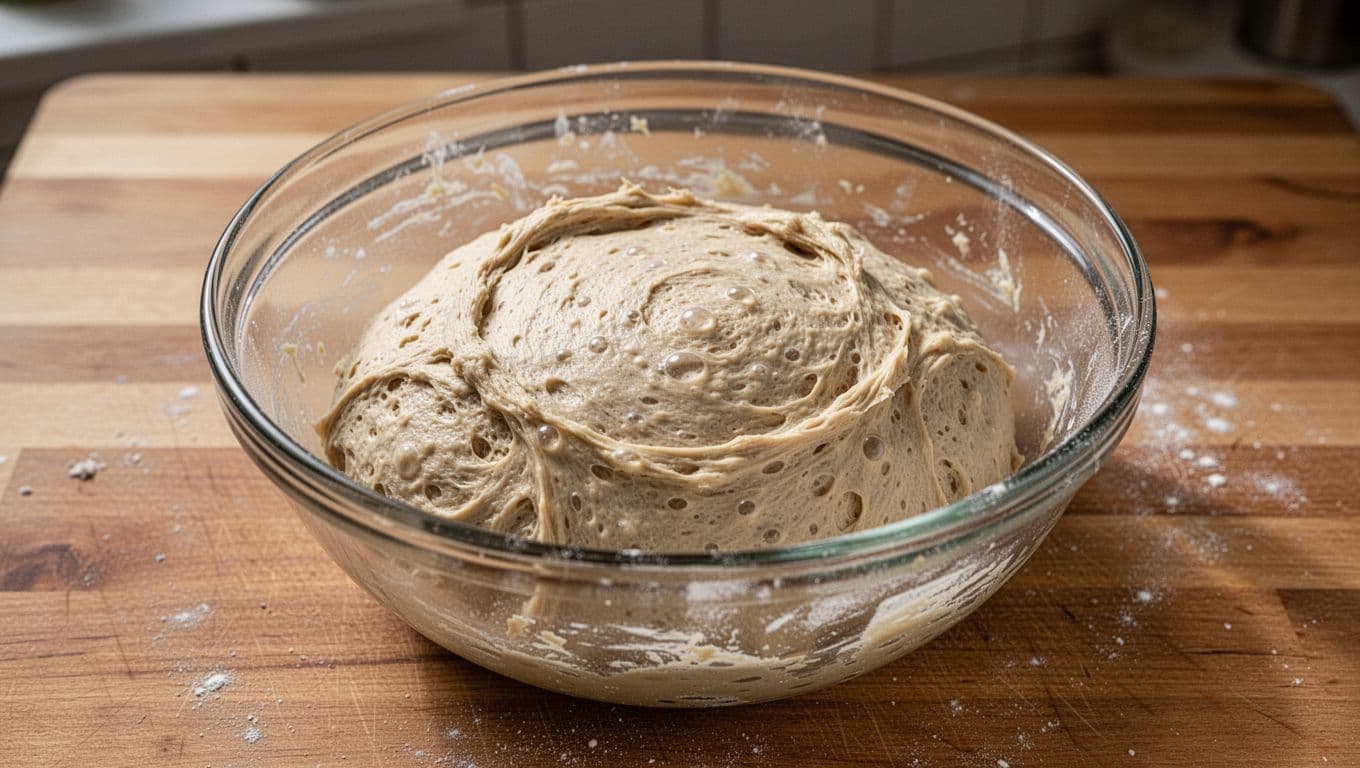
Counting sets helps, but the dough tells the truth. Some days it tightens fast, other days it stays loose and moody. That is why the best answer to “how many times should you stretch and fold sourdough bread” includes a simple skill: reading the dough.
We are trying to build strength without squeezing out the life. A good fold feels like tucking in a blanket, not wrestling a wet towel. If we watch the surface, the edges, and how it stretches, we can stop at the right time.
Signs the dough wants another fold
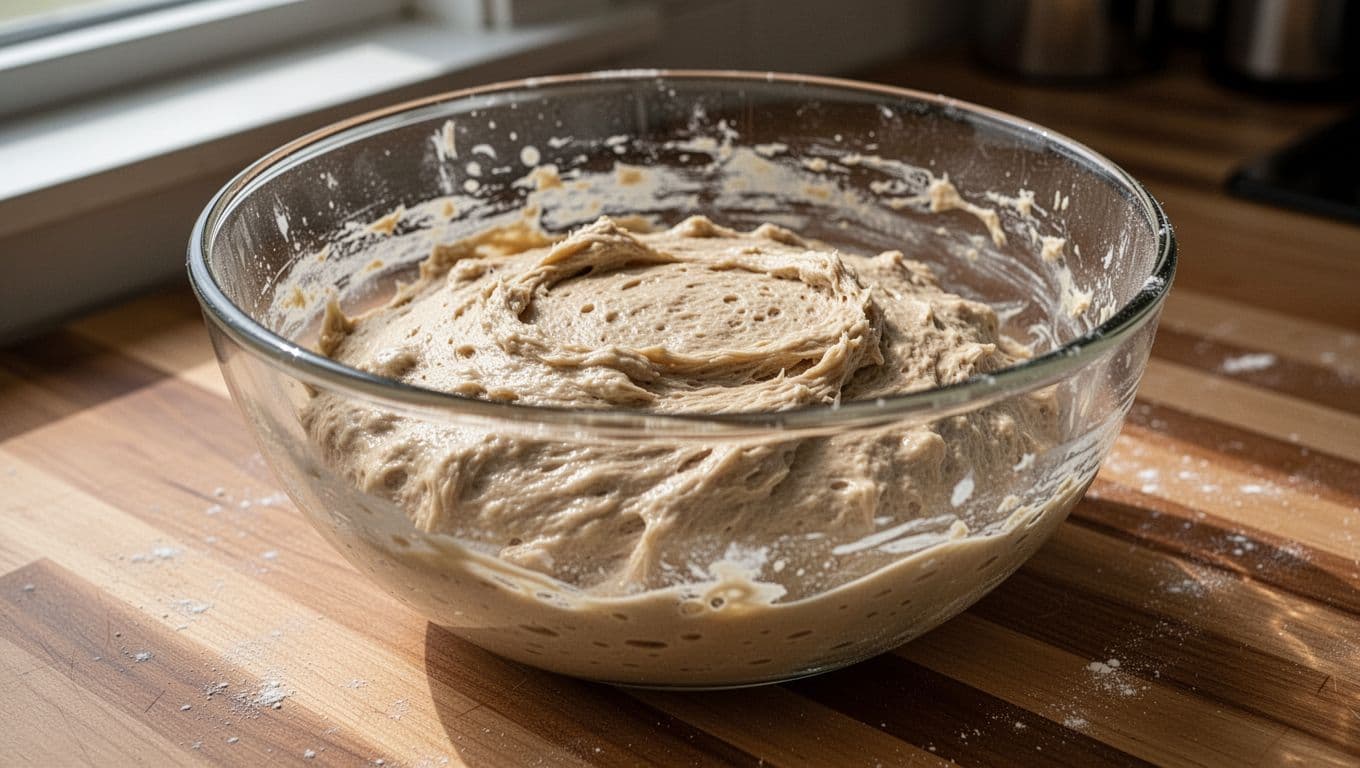
Early in bulk, dough often acts like it has no bones. We lift it, and it slides right back down. If it spreads flat soon after a set, that is a clear nudge that it still needs help, especially if your sourdough starter was particularly active and sped up the process.
We can spot it with both our eyes and our hands:
- It spreads fast after a fold, like batter settling in the bowl.
- It feels slack and loose, and it does not “push back” much.
- It looks rough on top, with a torn, shaggy look instead of a smoother skin.
- It will not hold a loose mound, even for a few minutes.
- The surface is still lumpy, with thick ridges that do not blend.
A quick, gentle test keeps us honest. We do not need to yank the dough high. Instead, we slide damp fingers under one edge and lift slowly. If the dough shows extensibility and stretches a bit before it thins, we are on track. If it barely stretches and seems to pour, we need another set and a little more rest time after.
Sometimes we see little tears and assume the dough is “too weak.” Yet a small tear can also mean we pulled too far, too fast. Gluten is like a rubber band, it stretches best when we ease into it. If it tightens and threatens to rip, we stop, rest, then come back.
If the dough keeps slumping and looks bumpy, we fold again. If it tightens and starts to round up, we slow down.
If you want a practical explanation of why dough can suddenly feel tight mid-fold, this Q&A is helpful: dough getting tight during folds.
Signs we can stop, smooth skin, stretch, and a dough that holds shape
The “ready” dough has a different vibe. It stops acting like paste and starts acting like a soft cushion. When we tip the bowl a bit, it holds together more as one mass. It may still be tacky, but it is no longer messy in the same way.
Here is what we like to see by the last set:
A smoother surface shows up first. The top begins to look more even, sometimes a little satiny. Next, the dough starts to hold a rounded shape in the bowl. It will not be a tight ball, but it should keep a loose mound instead of sliding out flat.
The edges tell a big story. Stronger dough has tighter edges where it meets the bowl. After we fold, the seam area looks more organized, not shredded. When we lift an edge, we feel elasticity and light resistance, like a trampoline that gives, then pulls back.
We may also notice air bubbles, either on top or just under the skin. That is a good sign. It means fermentation is underway, and the dough can trap some gas. At this point, stopping helps us preserve the internal structure and keep those air bubbles. Each extra fold later in bulk risks pressing out the air we worked for, which can tighten the crumb.
A simple checkpoint we use: after a set, we wait 10 minutes. If the dough still looks rounded and calmer, we earned the right to stop folding and let bulk continue undisturbed.
Red flags, tearing, soupiness, or over-fermented dough
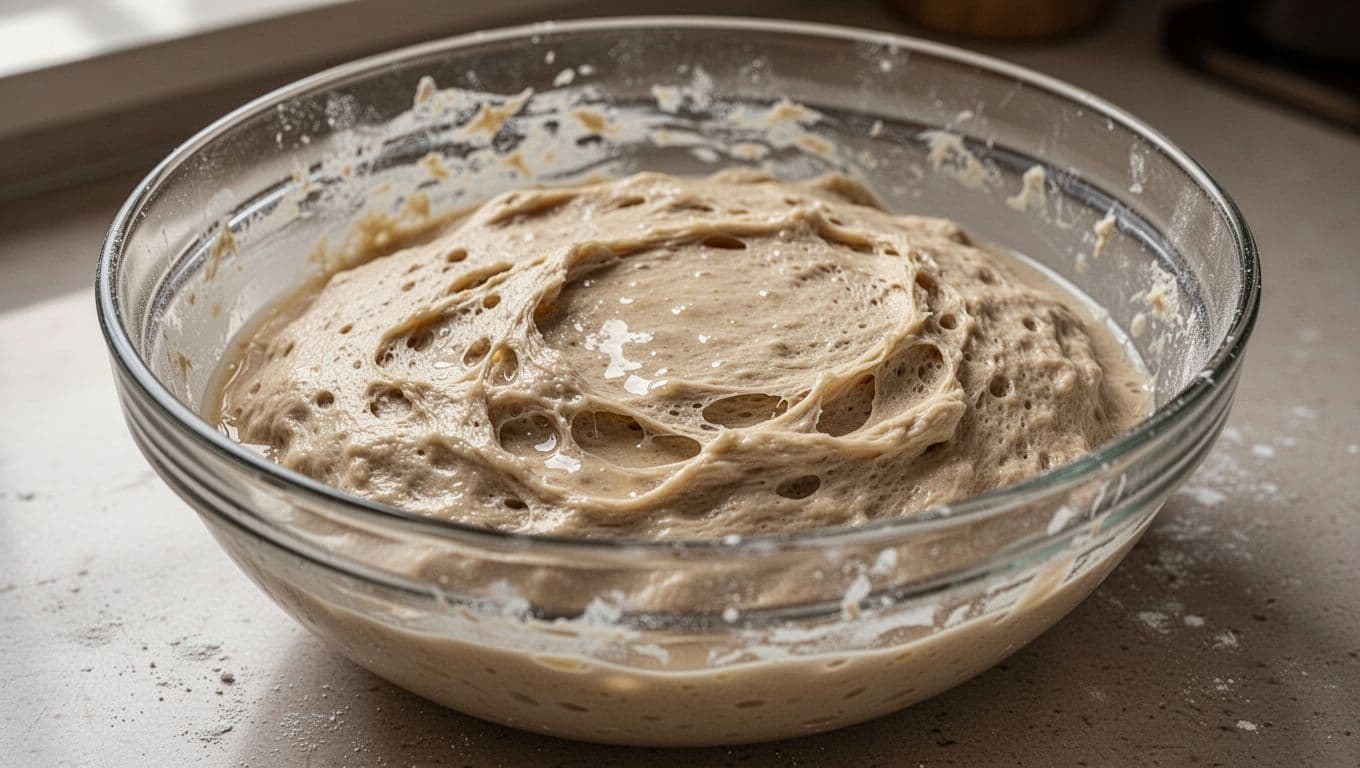
Tearing can happen for two reasons, and the fix depends on which one we caused. First, we might be too rough. Fast pulls and high lifts can rip even healthy dough. Second, the dough might be too far along. As it ferments, higher dough temperature, acid, and enzymes can weaken gluten, and the dough turns fragile.
We watch for these red flags:
- The dough feels soupy and runs like thick paint.
- It turns shinier but weaker, and it will not hold shape at all.
- It tears easily even with gentle stretching.
- The surface looks dull and broken, not smooth and stretchy.
- It gets gassy but slack, like it is full of air but has no structure.
When we see these signs, we stop folding right away. More handling will not rebuild a broken network. Instead, we let it rest and move forward as gently as we can, even if shaping needs extra care.
Next bake, we adjust the causes, not the symptoms:
- Shorten bulk next time, because the gluten likely broke down late.
- Lower dough temperature, since warm dough ferments faster and weakens sooner.
- Use less starter (lower inoculation), so the dough moves at a calmer pace.
- Do fewer folds earlier, then leave it alone once it has strength.
A good fold builds strength. A panicked fold breaks it. When the dough turns fragile, we step back and change the plan next time.
Keeping calm matters. One over-proofed batch does not mean we failed. It just means the dough ran faster than our schedule, and now we know what to watch for.
How hydration, flour, and temperature change the number of folds we need
A fold schedule that works great one week can flop the next. The big reason is dough feel changes with water, flour, and heat. Wet dough acts like a loose net that needs a few extra knots. Stiff dough can fight back and tear. Warm kitchens speed everything up, so our folding window gets shorter.
When we ask, “how many times should you stretch and fold sourdough bread”, we get the best answer by matching the folds to what the dough can handle right now.
High-hydration dough usually needs more sets, and gentler handling
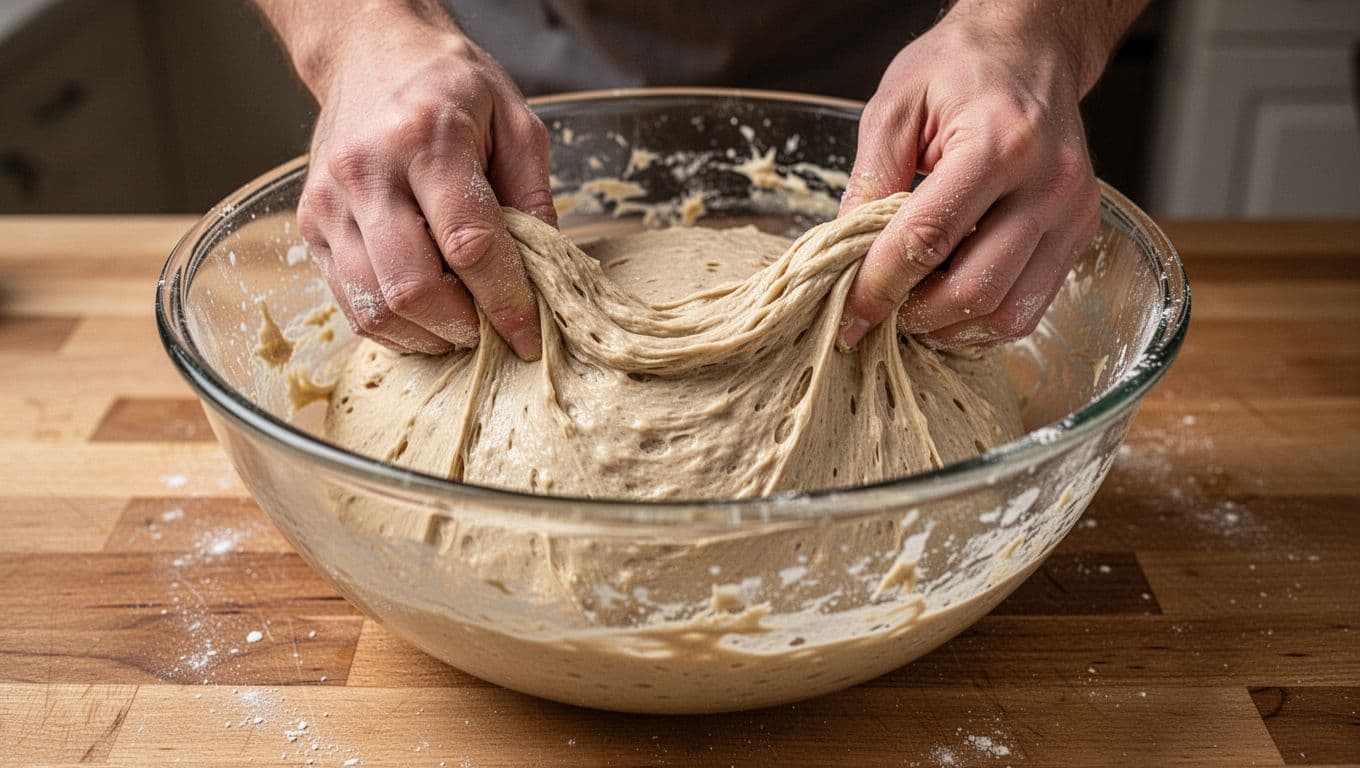
Wetter dough often feels weak at first because the gluten is floating in extra water. It stretches easily, but it doesn’t hold shape yet. Early on, it can slump like a thick puddle, even right after a set. That “no bones” feeling is normal. An autolyse before folding begins can help build strength in high hydration dough.
For high-hydration dough, we usually do 4 to 6 shorter sets, and we keep them closer together early. A simple plan looks like this:
- First hour: a set every 15 to 30 minutes
- After that: slow down to every 30 to 45 minutes, only if the dough still spreads fast
We also keep the handling soft. Instead of yanking high, we lift just until we feel resistance, then fold it over. Wet dough rewards patience, especially when working with sticky dough.
If regular stretch-and-folds feel messy, or if the dough keeps tearing, we switch methods. Coil folds often work better with very wet dough because we can lift the dough from the center and let it tuck under itself. It feels calmer and keeps the gas in better.
For more help with sticky dough habits (like wet hands, quick movements, and when to back off), King Arthur has a solid guide on working with high-hydration dough.
With very wet dough, we earn strength early, then we stop once it starts holding a rounded shape.
Medium hydration is the sweet spot for classic stretch and folds
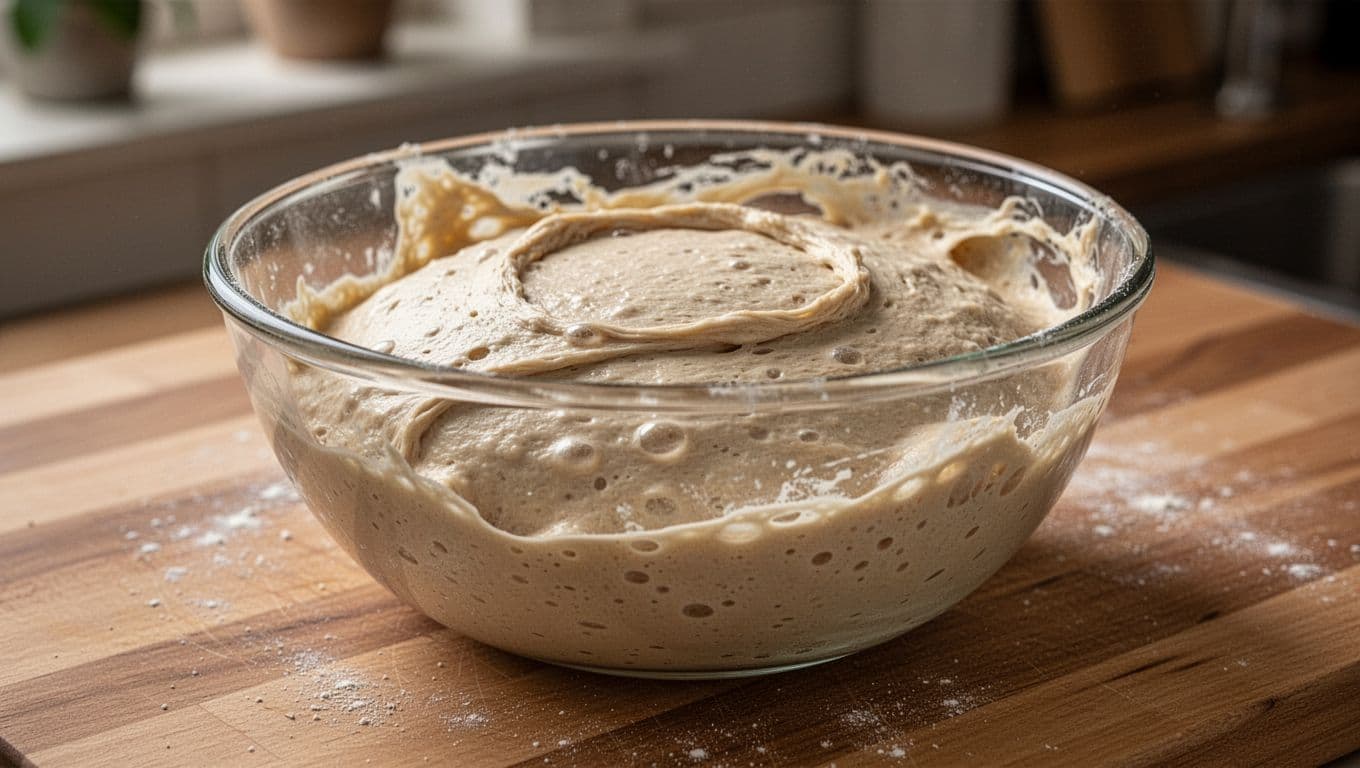
Most home sourdough sits in the 70 to 80 percent hydration range. This is where classic stretch-and-folds shine, because the dough stretches well without turning into glue.
In this zone, 3 to 4 sets spaced about every 30 minutes usually works. The dough gets enough time to relax between sets, so each fold builds strength instead of causing rips.
Here is what we tend to notice as we go:
- After set 2: the dough feels less shaggy and starts to pull together. It still sticks, but it stops smearing as much on our fingers.
- After set 3: strength becomes obvious. The dough lifts in a wider sheet, the surface looks smoother, and it holds a loose mound longer.
Flour choice matters here too. Bread flour often tightens faster, so we may stop at three sets. If we add whole wheat or rye, the dough can feel stickier and less elastic. In that case, we still aim for 3 to 4 sets, but we keep them gentle and let the rests do more work.
If we want a deeper read on how dough temp affects the pace and feel during bulk, this is a clear reference: why dough temperature matters.
Lower hydration dough may need fewer folds, or a short knead instead
Stiffer dough can be a different animal. It may feel strong right after mixing, yet it can also tear during folds because it doesn’t want to stretch. When we force it, we can shred the surface and leave it rough.
With lower hydration dough, we often do 0 to 2 gentle sets total. Sometimes we skip folding and do a brief knead early on instead, just to smooth the dough and bring it together. That can be as simple as a few minutes of steady kneading, then letting it rest. For even stiffer mixes, slap and fold offers another option to develop structure without overworking.
A quick way to choose:
- If the dough feels tight and dry, we knead a little, then rest.
- If it feels firm but still bends without ripping, we do one or two light sets, then leave it alone.
In other words, folds help most when dough is wetter. Stiff dough already has structure, so the extra folding often adds little, and can cause damage.
Cold kitchens and warm kitchens, how we space folds to match fermentation speed
Temperature changes the pace of bulk fermentation, and that changes our folding rhythm. Warm dough ferments fast, so the dough can turn airy sooner. At that point, extra folds stop helping and start popping bubbles.
In a warm kitchen, we keep folds early and avoid folding late into bulk:
- We might do the same 3 to 4 sets, but start sooner and keep the early rests a bit shorter.
- Once the dough looks puffy and holds shape, we stop, even if the clock says we “have time.”
In a cool kitchen, fermentation crawls, and the dough takes longer to build strength. We usually keep a similar number of sets, but we stretch the rest periods a bit. Longer rests also help gluten relax, so the next fold feels smoother.
Still, we don’t follow time alone. We watch for a steadier rise, a smoother skin, and dough that feels elastic instead of runny. If it is strengthening fast, we stop early. If it keeps spreading flat, we add a set.
The clock gives us a plan, but the dough decides the finish line.
A beginner-friendly stretch and fold routine, plus fixes for common problems
Stretch and folds should feel tidy and calm. We are not kneading, and we are not trying to “finish” the dough in one round. We are giving it a few quick boosts early, then letting time do the heavy lifting. That rhythm is a big part of answering “how many times should you stretch and fold sourdough bread” without overworking the dough.
Below is the exact routine we use at home, plus quick switches and fixes when the dough acts up.
Our step-by-step method for one full set (no stress, no mess)
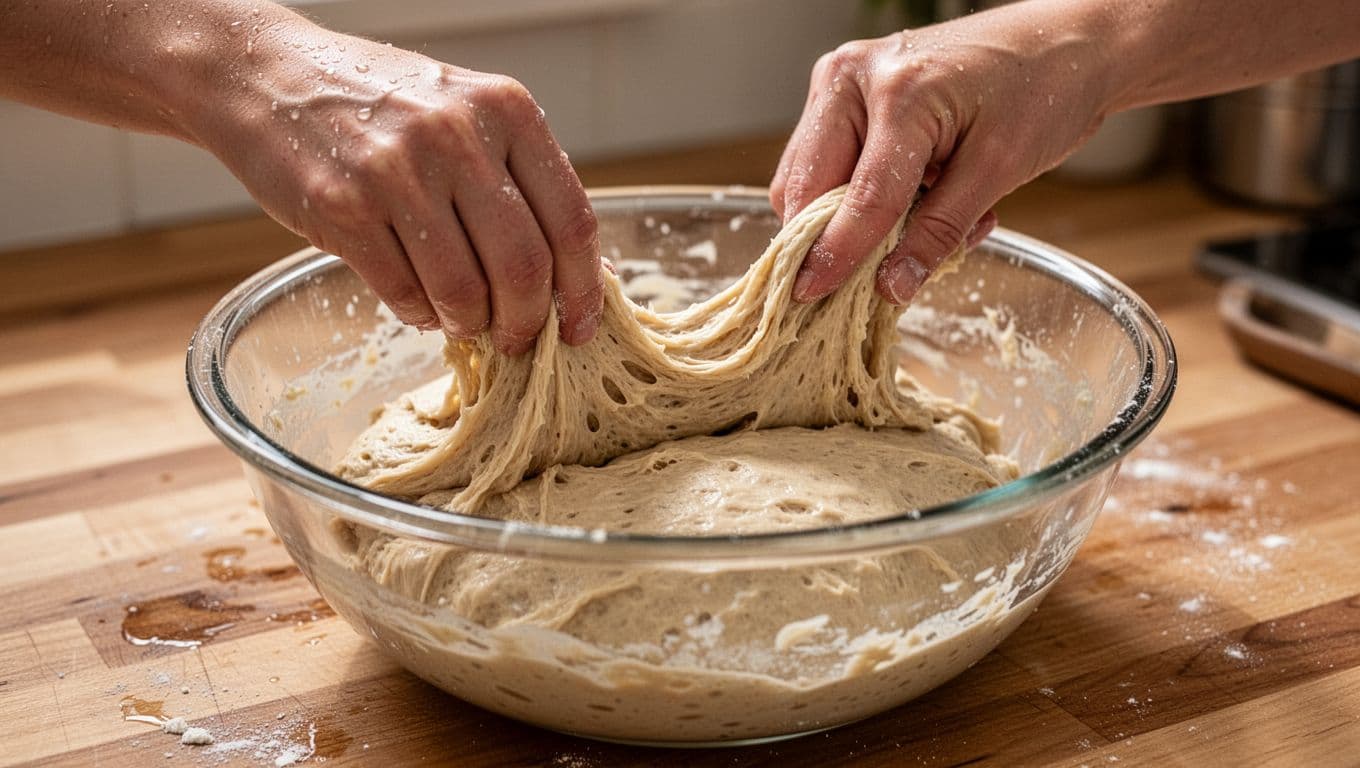
We like to do stretch and folds right in the bowl. It stays cleaner, and we avoid adding flour that can stiffen the dough. One full set is just four folds, one from each side. Wet hands make handling sticky dough easy throughout.
Here is our no-fuss method:
- Wet our hands. We dip fingers in water, then shake off extra. Damp hands beat flour here.
- Loosen the edge. We slide fingertips under one side of the dough. Fingers stay together, like a paddle.
- Lift gently. We stretch the dough by pulling up until we feel real resistance. We stop before the dough thins or tears.
- Fold over the center. We drape that flap across the top, like folding a soft towel.
- Turn the bowl a quarter turn. We rotate it about 90 degrees.
- Repeat for all four sides. After the fourth fold, the dough should look a bit tighter.
- Cover the bowl. Then we let it rest until the next set.
A few small habits keep things clean and fast:
- We skip bench flour. Flour during folds can leave dry streaks and weak seams later.
- We keep a bowl scraper nearby. If the dough clings to the bowl, a scraper helps us lift an edge without yanking.
- We move with purpose. Slow is fine, but hesitation makes sticking worse.
- We don’t rip the dough. If it starts to tear, we stop lifting and fold sooner.
A good fold feels like a calm tug and a soft drape. If it feels like a fight, we rest longer next time.
Stretch and fold vs coil fold, when we switch techniques
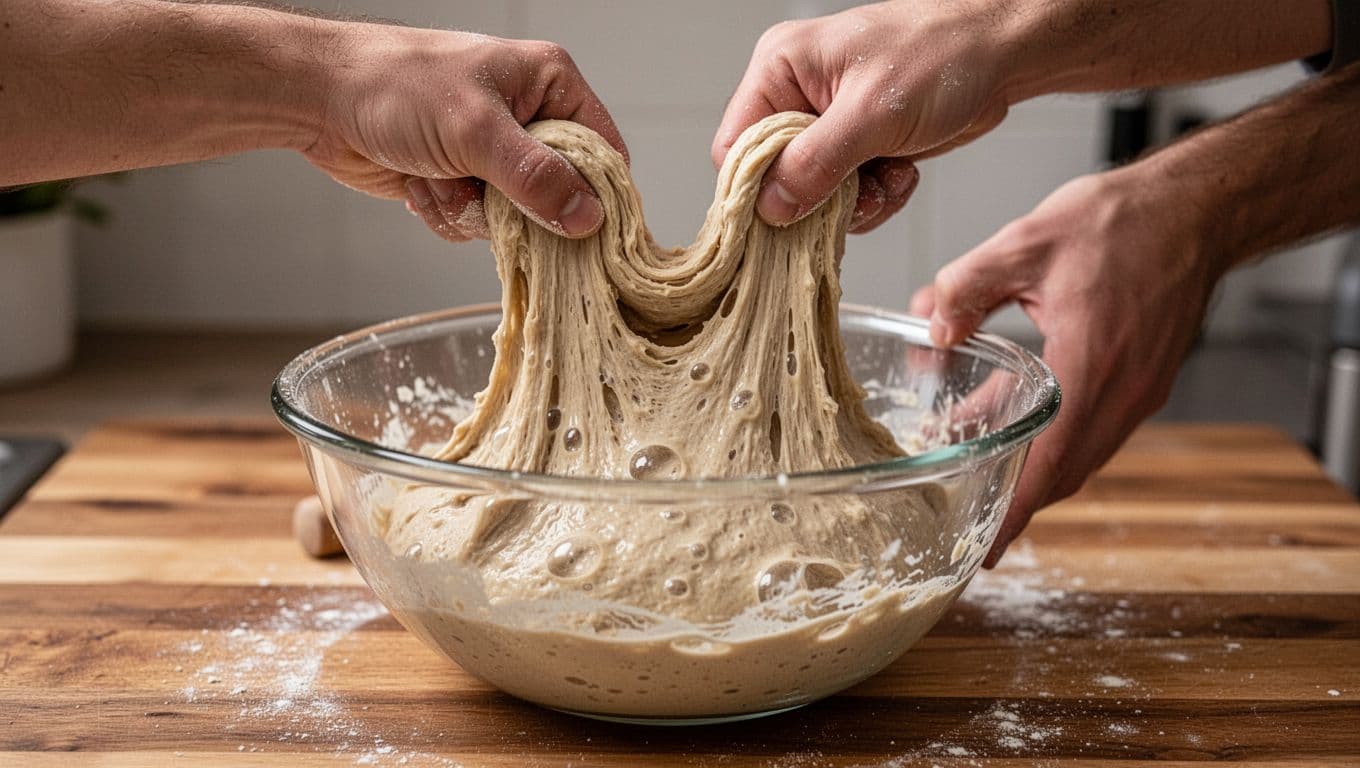
Both methods build strength, but they feel different in the hands.
Stretch and fold is the classic move. We grab one side, stretch, then fold it over. It works best early in bulk, when the dough is still dense and needs structure.
Coil fold is gentler. We lift the dough from the middle, and it tucks under itself as it settles. That makes it a great choice for very wet dough or dough that already shows bubbles and jiggle. We also switch to coil folds when stretch and folds start tearing the dough, even with longer rests. Coil folds preserve more of those delicate bubbles as bulk progresses.
Mini coil-fold how-to (the quick version): We wet our hands, then slide both hands under the center of the dough. Next, we lift straight up until the ends drape down. Then we let the dough lower back into the bowl, so the tucked ends fold under like a coil. After that, we turn the bowl and repeat once more.
If we want a visual comparison and a few use cases, these guides lay it out clearly: coil fold vs stretch and fold basics and when coil folds help most.
Common mistakes that change the count (and how we fix them fast)
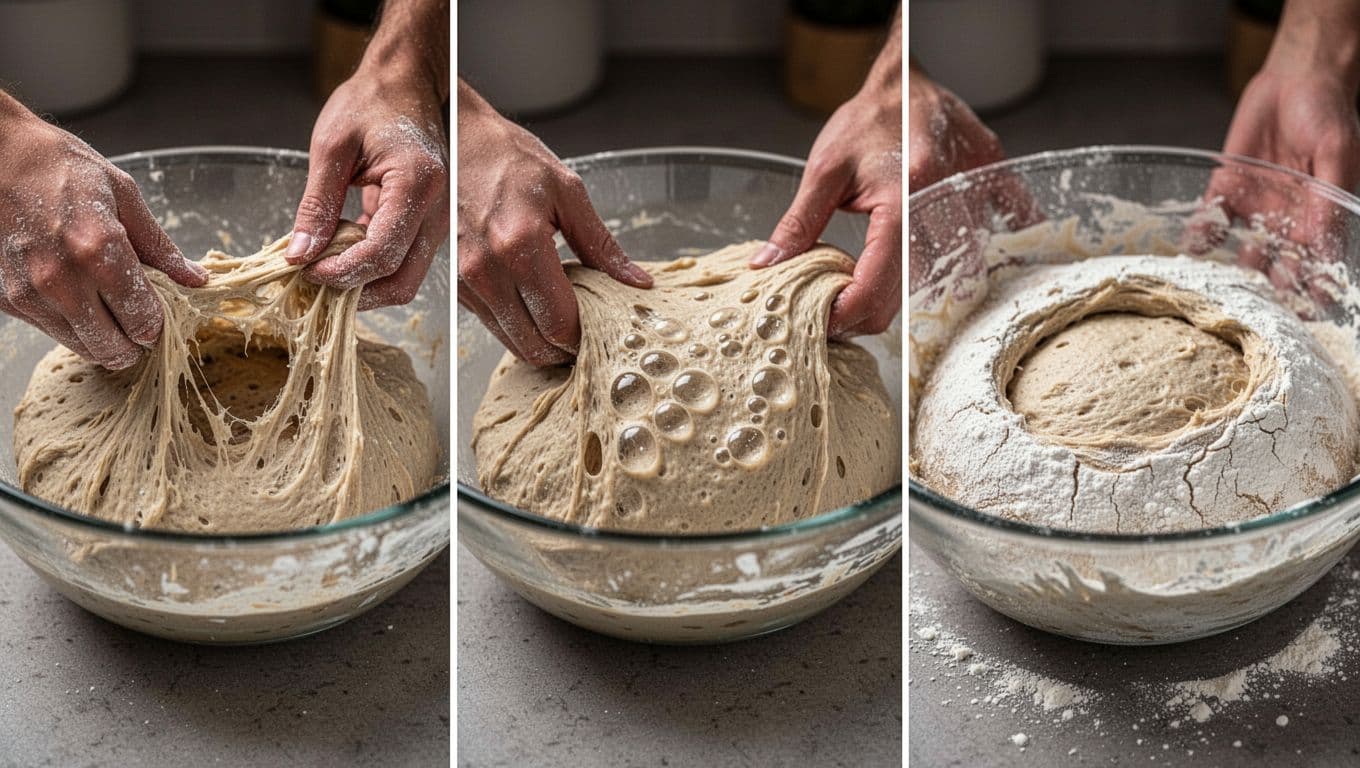
When folds go wrong, we usually respond by changing the count. Sometimes that helps. Other times it makes the dough worse. These are the mistakes we see most, plus the fastest fixes.
Skipping the early sets (then trying to “catch up”). Fix now: Add one extra set soon, while the dough is still early in bulk, then go back to resting. Next bake: Set a timer for the first 60 to 90 minutes. Early strength is easier to build than late strength, which supports better oven spring in the dutch oven.
Folding too late into bulk and crushing bubbles. Fix now: Stop folding once the dough looks puffy and holds shape. If it feels loose, switch to one gentle coil fold, then hands off. Next bake: Put most folds in the first 1 to 2 hours, then let the dough rise in peace.
Using dry hands (instant sticking, then tearing). Fix now: Wet hands again, wait 5 minutes, then continue gently. If the dough is smeared, use a bowl scraper to tidy the edges. Next bake: Keep a small bowl of water beside the dough, and re-wet every set.
Pulling too hard (thin spots, rips, rough skin). Fix now: Shorten the lift. Fold earlier in the motion, and add 10 to 20 minutes more rest before the next set. Next bake: Think “lift until it resists,” not “lift until it’s huge.” Dough strength builds with repeats, not hero pulls.
Doing too many sets because we are nervous. Fix now: Stop once the dough feels elastic and holds a loose mound. More folds won’t add height if bulk is already moving. Next bake: Pick a plan (3 or 4 sets), then let dough cues overrule anxiety. If it is smooth and airy, we are done.
Adding too much flour during folds (stiff layers, weak bonding). Fix now: Switch back to wet hands and keep folding in the bowl. If flour is already in there, give it longer rests so dry bits can hydrate. Next bake: Dust flour only during shaping, not during early strength work.
If we want a quick list of beginner traps beyond folding (starter timing, temp, and handling), this video is a useful checklist: common beginner sourdough mistakes.
Quick FAQ, what if we miss a set, can we do more later, and does it still work?
What if we miss one set? Usually fine. We do the next set as planned, and we watch dough feel.
What if we miss all the early sets? That often hurts structure. We can add one or two gentle sets as soon as we notice, but we should expect a looser dough.
Can we do more folds later to make up for it? We can, but it is risky. Late folds can pop bubbles and slow the rise.
Why do late folds deflate the dough? By late bulk in the fermentation process, the dough holds gas like a sponge. Pressing and stretching squeezes that gas out.
Does it still work if we change techniques mid-bulk? Yes. We often start with stretch and folds, then switch to coil folds once bubbles show up.
If the dough tears, should we fold more or less? Less force, longer rests. Tearing usually means the dough is tight or tired, not that it needs extra handling.
Conclusion
A solid answer to “how many times should you stretch and fold sourdough bread” is simple: we aim for 3 to 4 sets of stretch and fold sourdough in the first 1 to 2 hours of bulk fermentation, about every 30 minutes. That early work promotes gluten development while the dough is still dense, then we stop so it can keep the air it earns.
Still, the dough changes the plan. With wetter dough, we add a couple more gentle sets (often 4 to 6) and keep our hands light. With stiffer dough, we cut back, sometimes to 0 to 2 sets, because forcing folds can cause tears.
We can trust this process because it has a clear finish line: the dough turns smoother, holds a loose mound, and stretches with calm pullback. Try the baseline schedule once, then take notes after each set on feel, spread, and bubbles. Thanks for baking with us, that one small logbook habit makes every next loaf of sourdough bread easier.