


High-Impact SEO Strategy for Signs of Mood & Bipolar Disorder Keywords Targeting Women [2025 Update] Many women worry about mood swings or sudden shifts in energy. Too often, they search online but land on articles that barely skim the surface. A focused SEO plan meets real needs by guiding you to useful, in-depth resources about mood and bipolar disorder symptoms. When you target “signs of” in your search, you want smart, clear answers, not vague lists.
Keywords like “signs of” aren’t just words. You rely on them to spot patterns, seek support, or confirm a gut feeling. This is why a sharp SEO strategy matters. It makes truly helpful mental health content easier to find, so you get the answers you count on most.
How Women Search for Mood and Bipolar Disorder Topics
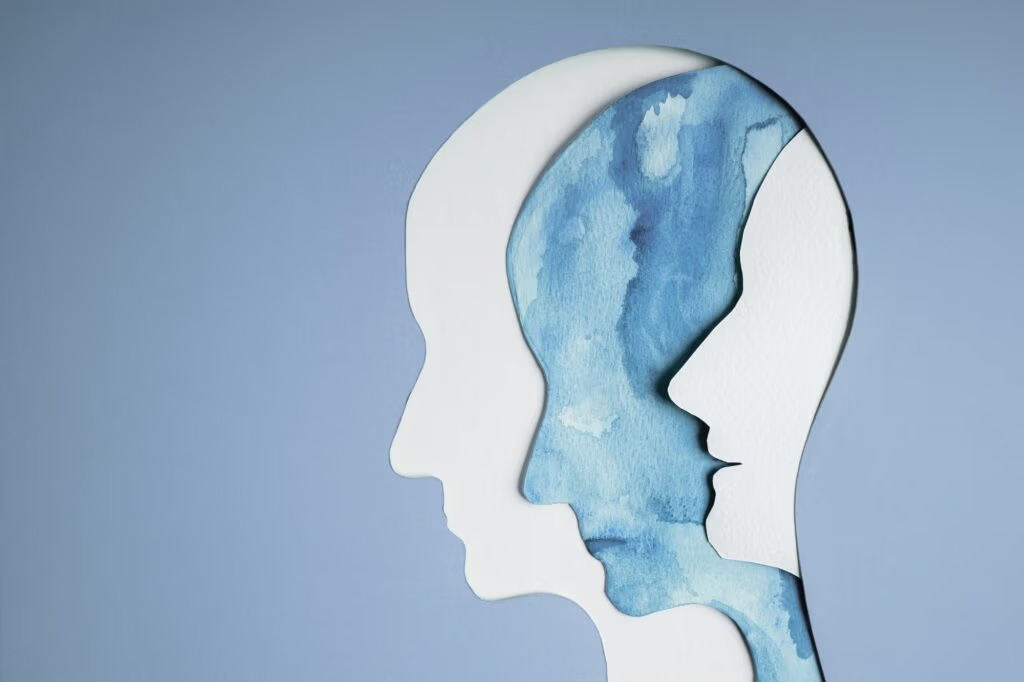
Women looking for answers about mood and bipolar disorder often type in clear, everyday questions. The phrase “signs of” shows up in many Google searches. These searches reflect worries about changes in mood, energy, or behavior. Women want solutions and hope, not just textbook lists. They value real stories, answers about daily life, and advice that fits real problems.
Patterns in Search Terms
You likely notice that women use simple phrases when searching for help:
- signs of mood disorder
- signs of bipolar disorder in women
- why am I having mood swings
- how do I know if I have bipolar
These keywords sound like someone talking to a friend, not just listing symptoms from a medical book. The focus is often on true changes in daily life, such as sudden sadness, high energy, or trouble sleeping. Searches often include words like tired, irritable, anxious, or overwhelmed. According to Women’s Health.gov, mood shifts and energy changes are strong reasons many women start searching in the first place.
What Women Hope to Find
Most women want more than a medical rundown. They want to see stories and clear next steps. Your content wins trust when it combines common search language with open, honest advice. The most helpful articles use:
- Direct and caring language
- Real life examples and stories
- Simple lists of early warning signs, such as those found in Recognize The Signs: Women’s Mental Health Symptoms
- Tips for tracking mood changes
When a woman types “signs of mood swings,” she may need to learn how to tell if what she feels is normal or if it could be something more. Adding relatable facts and short how-to steps makes the content more useful. You help by offering comfort and answers in plain language.
Triggers and Behavior in Search
Certain life changes or stress points can drive women to search for help. These include:
- Pregnancy or postpartum changes
- Starting or stopping medication
- High stress at home or work
- Loss or grief
During these times, women may look for stories from others who faced the same problems. They might search for “signs of bipolar disorder after pregnancy” or “why am I so irritable lately.” If your content addresses how mood disorders fit into life’s tough moments, you reach people when they need answers the most.
What Drives Clicks and Shares
You get more clicks and shares when you answer real questions in real words. Keep the focus on action and empathy. Use lists, short paragraphs, and bold key facts. For example, you can give a practical run-down of bipolar symptoms in women and connect this to what it feels like in daily life.
Also, when women search for “signs of” their focus is often on figuring out what’s normal, what needs help, and where to go next. Useful resources—like explanations on women’s mental health symptoms—build trust fast.
Supporting Long-Term Needs
Women’s searches are not always about diagnosis, but about everyday life. Ongoing needs may include:
- Managing stress
- Finding support groups
- Learning self-care habits that really work
By including sections or links to support options, such as how to recognize the signs of mental health symptoms in women, your blog offers both answers and hope. This supports women at every point—from curious searching to seeking real change.
For more about the “signs of” language and the symptoms women search for, see our guide on early signs of bipolar disorder in women. Keep your words friendly and your advice real, and trust will follow.
Selecting High-Impact Keywords: From Research to Results
Smart SEO for mood and bipolar disorder content aimed at women starts with the right keywords. If you want your advice to get seen, your words must match women’s needs and the language they use online. Here’s how you pick words that work, blend with search intent, and deliver steady results. Each step below helps you grow trust and traffic—without getting lost in technical details.
Incorporating User Search Intent in Keyword Selection
What a woman types into Google shows her true need—answers, stories, or ways to cope. If you chase raw traffic, you risk missing out on genuine needs. Stick to keywords that echo what women actually want.
- Find real-life phrases, not just textbook words.
- Focus on concerns like “signs of mood swings,” “signs of bipolar disorder in women,” or “mood disorder help.”
- Put yourself in their place. Would you click if the page gave only medical jargon, or would you want practical steps and comfort?
- Always check if your chosen keywords sound like someone asking for help, not reading a brochure.
Understanding intent is about listening, not guessing. Words like “signs of” quickly connect with worry or hope, not just curiosity.
Finding Long-Tail Keywords with Low Competition
Long-tail keywords are short questions or phrases that target exact needs. They’re easy to miss, but they help small blogs outrank big brands. These phrases often come from real questions women ask while searching for answers about mood or energy changes.
Look for:
- Phrases that repeat in search suggestions (“signs of bipolar before period,” “how to track mood changes”)
- Words that mix symptoms with life events (“signs of mood disorder after pregnancy”)
- Questions written as someone would ask them (“am I moody or something more serious?”)
To uncover these, use Google’s autocomplete, answer boxes, or tools like Google Keyword Planner. Pick ones with few big websites on the first page. This opens a path for your advice to reach women who need it now. For more tips, check out this helpful guide on choosing strong mental health keywords.
Evaluating Keyword Relevance with Search Volume Data
Popularity matters, but balance is key. A high-volume keyword looks flashy, but can be hard to rank. Small, steady search numbers may be better for new content.
- Use keyword tools to check monthly search counts.
- Compare your list—does “signs of mood disorders in women” get enough traffic to matter?
- Don’t ignore less popular terms if they fit your readers’ real search habits.
Mix your list. Short, popular words bring in new readers quickly, while long, detailed phrases connect you to women ready for advice or answers. Reliable sources such as Simplified SEO Consulting’s list of mental health keywords can help you spot trends and avoid empty phrases.
For more insights on finding the right balance, take a look at public research on optimal search tactics for mental health topics. The best results come from using a mix—catch easy wins but also work steadily for bigger gains with targeted “signs of” searches and strong intent-focused phrases.
Content Strategies That Resonate: Building Useful Pages Around Target Keywords
To draw women searching for the “signs of” mood or bipolar disorder, your content must be useful and trustworthy, not just stuffed with the right keywords. You build real value by thinking about her worries, her day-to-day struggles, and the questions she repeats in her head. Let’s break down ways you can create pages that go beyond basic information and actually help women find the answers and support they truly want.
Crafting Informative ‘Signs Of’ Pages for Women
Real answers matter. A strong “signs of” page isn’t just a checklist of symptoms—it’s a guide built for women who want clear, honest information. Focus on:
- Real-life language: Use words women actually search for, like “feeling tired all the time,” “sudden anger,” or “why can’t I sleep?”
- Everyday examples: Connect medical facts with common situations. Describe what “racing thoughts” or “low moods” look like at work, home, or around friends.
- Structured info: Organize content with short lists, bold headers, and quick tips. It helps readers scan and spot answers fast.
- Actionable advice: Don’t just describe symptoms. Offer steps to track mood, questions to ask a doctor, or clues for when to seek help.
A good example comes from the SignsOF approach, which puts practical steps at the top and fills each section with relatable pointers. For extra value, guide readers to details such as early signs of bipolar disorder in women. Pages like that act as both a mirror and a map—showing what’s happening and showing where to go next.
Using Empathy and Personal Stories to Build Trust
Trust doesn’t happen with symptoms lists alone. Women searching for “signs of” need to feel seen, not studied. Share stories or short quotes about real struggles and wins. Weave in personal confessions—how it felt to wake up worried for no reason, or to bounce between high energy one week and exhaustion the next.
- Empathy first: Describe emotions clearly. Use statements like, “It’s not just sadness; it’s a weight that follows you even when you try to be happy.”
- Narratives over stats: While science backs everything you say, real voices grab attention. Links to firsthand accounts, as found in mental health blogs or support forums, can make the content feel safer.
- Invite connection: Let readers see themselves in the content. End a section with prompts like, “Does this sound familiar?” or “You’re not alone if you’ve noticed these changes.”
According to Psychology Today’s guide on women’s mood disorders, stories help bridge the gap between cold facts and raw feelings. When a woman feels understood, she’s more likely to trust your page and return for advice.
Structuring Headlines and Subheadings for SEO Strength
Strong headlines make your content pop in search results and keep readers moving through your page. Every “signs of” page must use headline tricks to boost clarity, clicks, and SEO weight.
- Keyword power: Make sure each main header (H2, H3) uses the “signs of” phrase and words women search for. It tells search engines your content matches real needs.
- Clear hierarchy: Use H2 for main ideas, H3 for supporting points. Short, punchy headlines work best.
- Question-style subheads: Women type questions into Google. Use them as section titles (“What are signs of mood swings in women?”)
- Easy to scan: Headers should promise value—think “5 Early Signs of Bipolar Disorder You Might Overlook” or “How to Tell if Mood Changes Mean More.”
Search engines value structure and clarity. For a solid example, notice how posts on early signs of bipolar disorder in women use keyword-focused headlines to guide users through the most relevant clues and advice.
By blending useful headlines, empathy, and relatable steps, your “signs of” content will not only rank higher but will truly help the women who need it most.
On-Page SEO Tactics for Mood and Bipolar Disorder Content
Smart on-page SEO does more than please search algorithms. It shapes how women find and use your advice about the “signs of” mood and bipolar disorders. Each action you take, from headline to footer, helps bring answers closer to those who need them. These steps below will help you build pages that count for both users and search engines.
Optimizing Meta Titles and Descriptions
Your meta title is the first thing women see in search results. It can mean the difference between a click and a quick skip. To stand out, always use clear phrases and keep them under 60 characters. Include the “signs of” keyword and focus the message around what women want—clear info and a sense of hope.
For meta descriptions, stick to simple words and keep it under 160 characters. Speak to the reader’s real struggles: “Learn the signs of mood swings and bipolar disorder in women, plus tips to track changes and seek help.” Good descriptions tell readers what to expect and build trust right from the start.
Helpful tips for writing your meta tags:
- Put the “signs of” keyword near the start.
- Use strong words: notice, watch for, discover, find out.
- Show the benefit: Will they get a list? Real stories? Steps to act today?
For more on keyword-rich meta tags, you can review actionable guides like Moz’s advice on title tags and descriptions.
Strategic Internal Linking for Greater User Value
Internal links weave your content together and point readers to next steps. Use links to connect “signs of” symptom pages with how-to guides, stories, or deeper dives into topics like mood tracking or self-care for women.
When you mention a topic, help readers dig deeper. For instance, if you’re talking about coping with mood symptoms, naturally guide readers to more detail on tracking symptoms with a link like tools for tracking bipolar symptoms.
Best ways to link:
- Use anchor text that says what’s at the link (like “early warning signs of bipolar disorder in women,” not just “here”).
- Link pages about symptoms to your broader guides or personal stories.
- Spread your links out—one or two per section gives the best results.
A thoughtful approach boosts trust and page time. More important, women searching for answers won’t hit a dead end—they’ll always find a next step.
Enhancing Readability and Accessibility
You help more women when your pages are easy to read and easy to use. Structure content with short, simple sentences. Use bullet points, bold key phrases, and enough white space. This makes it simple for readers—especially during stress or foggy moods—to spot what matters most.
Add subheadings for each key “signs of” idea or symptom, so readers can skim and find what fits their story. Use clear fonts and high-contrast colors. Provide alt text for all images, so anyone using a screen reader can follow along.
Simple tricks to boost readability:
- Break content into two- or three-sentence blocks.
- Write at an 8th-grade reading level.
- Add checklists and quick how-to tips.
- Use plain words for complex ideas, especially when explaining mood changes.
To see how clear writing changes things, check out real-world examples like Harvard Health’s patient-centered articles.
Using Medical Schema Markup
Schema markup gives search engines more detail about your page. For health content, Medical Schema tells Google which info is about symptoms, causes, or treatments. This can boost your chances of showing up in “featured snippets” and rich results, making it easier for women to spot trusted answers high in search results.
If you’re explaining the “signs of” bipolar disorder, mark up the symptoms section with Medical Schema. This helps Google connect your advice to users’ search intent.
Ways to get started:
- Add schema for MedicalCondition, Symptom, and WebPage on each page.
- Use simple, factual info in your markup—what’s the main symptom, who’s it for, what’s your proof.
- Check your schema with Google’s Rich Results Tool to make sure it works.
You can find practical steps and ready-to-use code at Google’s structured data guidelines.
A few lines of schema won’t make your content jump to the top overnight. But it will show engines your content means business—and help women spot trusted “signs of” answers before anyone else.
Building Authority and Backlinks Within the Health Niche
Winning trust with women looking for “signs of” mood or bipolar disorders means more than ranking high. You need authority, proof, and real engagement with other voices in the field. When your site is seen as a trusted source, people are more likely to turn to you for answers. That trust comes with smart link building and showing proof you belong in the conversation. These steps don’t just help your rankings—they create stronger, safer spaces for women searching for real support.
Guest Posts and Expert Q&As to Build Trust
Sharing your insight on other credible sites isn’t just about getting a link. It sets you up as a go-to source for women searching for the early “signs of” mood or bipolar shifts.
- Reach out to health blogs, women’s wellness sites, and mental health counselors. Offer to share practical tips or answer common questions about mood swings or bipolar symptoms specific to women.
- Trade expert Q&As with clinicians or therapists who also serve your target audience. Readers can see real, actionable advice—not just facts—and Google sees you as part of a trusted network.
- Guest posts let you include a short author bio with a link back to your “signs of” pages. This helps search engines and readers trace your expertise.
- When sharing stories or advice, always link to resources that deliver next steps, such as how to recognize bipolar disorder in women.
Trust grows when your voice appears in many places, especially on respected platforms. It also helps real readers spot your advice when they need next steps.
Getting Featured on Health Resource Pages
Appearing on health resource lists or directories boosts your site’s authority fast. Getting your “signs of” content listed means more women see your page when searching for trusted answers.
To connect with these directories:
- Identify reputable sites, nonprofits, and hospital networks that feature “resources for women’s mental health.”
- Pitch your best content—like in-depth guides to “early signs of mood disorder in women.” Focus on resources that fill a real gap, such as what makes female symptoms different or how to get support at life milestones.
- Keep your resource pages updated, using plain language and honest advice. Upgrade pages often with the latest facts and links, so they’re worth referencing.
- Mentioning trusted external guides such as Mental Health America’s resources for women helps signal your credibility to both readers and search engines.
These resource links work like personal referrals. They lead women straight to your advice when they’re searching for “signs of” answers during big life moments.
Leveraging Internal and External Links
Internal links guide readers from one helpful page to another, keeping them on your site longer. Use them to connect “signs of” pages with symptom guides, mood tracking tools, and self-care steps that answer the next question your reader has.
- Place internal links naturally in your content. For example, bring women from an overview of bipolar warning signs to focused tips on bipolar disorder self-care for women.
- Use clear, descriptive anchor text. Instead of just saying “learn more,” be specific: “find support for mood swings after childbirth.”
- External links add extra value. When explaining a topic, you might reference an authoritative guide such as NIMH’s facts on bipolar disorder.
- Keep a balance—use enough links to be helpful, but not so many that the page looks crowded.
Linking this way builds trust with both readers and search engines. Each link helps answer a woman’s next question in her search for signs of mood or bipolar issues. When you connect her to stories, expert advice, and ways to take action, your site turns into a hub she can return to over and over.
Conclusion
A results-driven SEO plan for mood and bipolar disorder topics targeting women goes beyond surface advice. When you put real effort into the keywords and structured content built around “signs of,” you do more than get clicks—you guide real people searching for answers to the right place.
Each step is focused. From finding words women actually use, to shaping in-depth, honest advice that handles real life scenarios, you create trusted mental health resources. This opens the door to ongoing support, not just one-off visits.
The smart path forward blends care, clear structure, and solid facts. By keeping your content reliable and human, you offer real help to those looking for the “signs of” answers. If you want to give readers support that lasts, build pages as thorough as they are welcoming. For greater depth on recognizing early symptoms and what to do next, take a look at this detailed guide on early signs of bipolar disorder in women.
Thank you for exploring these strategies. If this helped strengthen your content or gave you new ideas, share your thoughts or connect with more guides across the site. Your input shapes what comes next and supports women who deserve better mental health answers.