You’re spotting toxicity when blame rolls downward and your leaders won’t own their mistakes. When people stay silent in meetings because they’re scared of speaking up honestly, that’s another red flag. And if your top performers keep walking out the door, well, that’s telling you something important. Talented folks have choices, and they’ll leave when trust disappears. There’s more to understand about what’s happening beneath the surface.
Key Takeaways
- Leaders avoid accountability and blame external circumstances or teams instead of owning decisions.
- Employees fear speaking up in meetings, resulting in silence over honest conversation and candor.
- Top performers and talented employees regularly depart due to lack of trust in leadership.
- Mistakes go unaddressed and repeat because blame flows downward instead of being resolved.
- Team collaboration suffers when fear prevents open pushback and honest dialogue about concerns.
Sign 1: Leadership Avoids Accountability

When leaders don’t own their mistakes, you’ll notice it pretty quickly. They’ll blame external circumstances, point fingers at their teams, or conveniently forget decisions they made. You might hear excuses like “the market shifted” or “nobody told me,” even when you know that’s not true.
This behavior trickles down fast. When your boss won’t take responsibility, you learn that admitting errors isn’t safe. You’ll start covering your tracks, deflecting blame, and protecting yourself instead of focusing on doing good work. Trust erodes because accountability goes one direction—downward.
When leaders avoid accountability, teams learn that admitting mistakes isn’t safe. Trust breaks down, blame flows downward, and real work suffers.
You’ll feel the frustration too. Mistakes don’t get addressed properly, so they repeat. Projects fail for the same reasons. Nothing improves because nobody’s genuinely problem-solving.
In healthy workplaces, leaders model accountability. They own their slip-ups, learn from them, and expect the same from everyone else. That’s how teams actually grow.
Sign 2: Fear Silences Honest Conversation
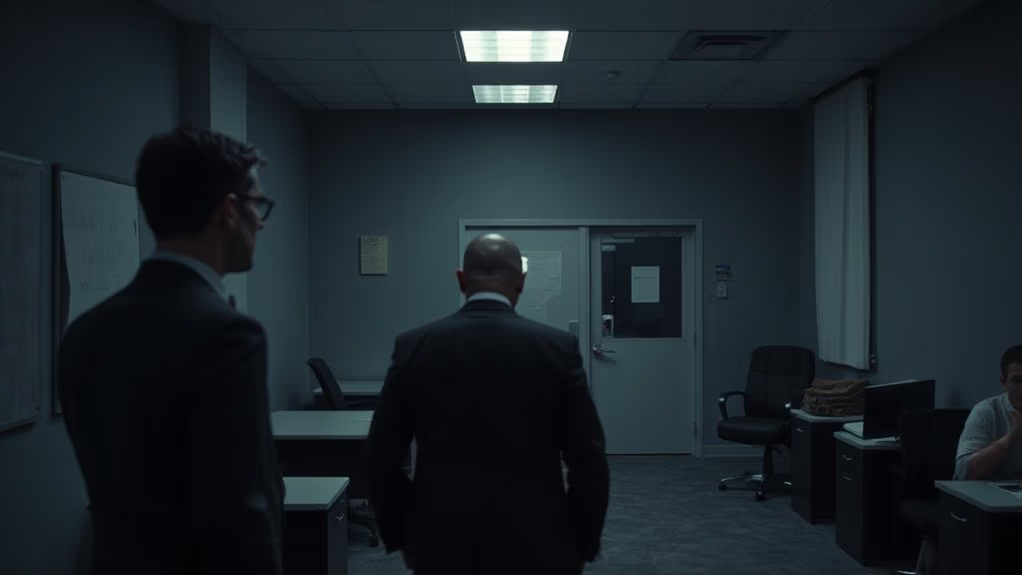

If you’re afraid to speak up in meetings, that’s a red flag.
When fear runs the workplace, honest conversation dies. You’ll notice people tiptoeing around issues, choosing silence over candor because they’re worried about consequences. That’s not healthy.
A toxic environment breeds fear through:
- Punishing dissent or different viewpoints
- Rewarding those who simply agree with leadership
- Creating an atmosphere where mistakes mean humiliation
- Making employees feel their concerns don’t matter
You deserve a workplace where you can share ideas without dreading retaliation. Real leaders welcome pushback—they know diverse perspectives strengthen decisions. When your gut tells you to stay quiet, something’s broken.
Trust your instincts. If speaking your mind feels dangerous, you’re not being paranoid. You’re recognizing a toxic culture. Good teams thrive on honest conversation, not fear-induced silence.
Sign 3: Your Best People Keep Leaving

Your top performers don’t just leave—they sprint for the exits. When your best people start resigning, you’re losing institutional knowledge, client relationships, and the folks who actually drive results. That’s a red flag you can’t ignore.
Here’s the hard truth: talented employees have options. They’ll tolerate reasonable challenges and even occasional setbacks, but they won’t stick around in a toxic environment. If you’re experiencing steady departures of high-achievers while mediocre performers stay put, something’s deeply wrong with your culture.
Talented employees have options. They won’t tolerate toxic culture, no matter the challenges. When your best leave and mediocre performers stay, your culture is broken.
Exit interviews often reveal the real reasons—lack of trust in leadership, feeling undervalued, or watching toxic behavior go unchecked. The cost isn’t just replacing them. You’re also dealing with depleted morale among remaining staff and the message these departures send to potential recruits.
Your organization’s health shows in who stays and who leaves. Pay attention.
Conclusion
You can’t build trust while dodging blame, yet you’re wondering why folks won’t speak up. You’re losing your sharpest minds—the ones you desperately need—because fear’s infected every corner. Here’s the hard truth: you’ve got a choice. You can keep pretending everything’s fine, or you can roll up your sleeves and do the messy work of change. Your workplace’s future depends on it.