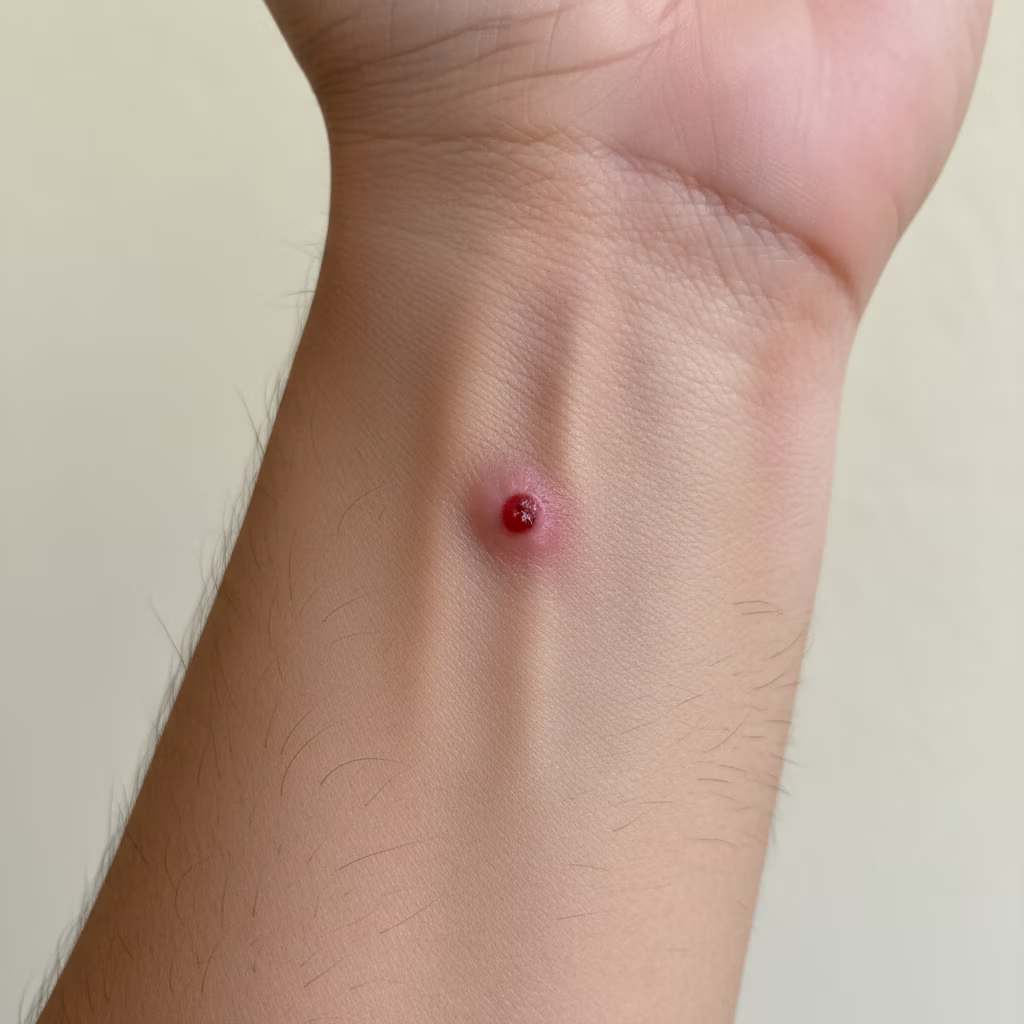
You might notice unusual discharge—yellowish, greenish, or cloudy stuff that smells off. Painful urination‘s another red flag; you could feel burning or stinging sensations. Lower abdominal pain might creep in as dull throbs or sharp twinges, especially during activity. Here’s the kicker: you could have chlamydia without noticing anything at all. Symptoms typically show up one to three weeks after exposure, but some folks stay completely silent carriers. Testing beats waiting around hoping symptoms appear, since you can spread it without knowing you’ve got it. Stick around to understand what’s really at stake.
Key Takeaways
- Symptoms appear 1-3 weeks after exposure, including abnormal yellowish or greenish discharge with an unpleasant odor.
- Painful urination ranging from mild burning to sharp stinging sensations, especially when combined with unusual discharge, indicates infection.
- Lower abdominal pain presents as dull throbs or sharp twinges that intensify during activities or intercourse.
- Many individuals remain asymptomatic for months, making regular testing essential regardless of symptom presence.
- Rectal symptoms may include discharge, bleeding, or discomfort during bowel movements in some infected individuals.
When Do Chlamydia Symptoms Start?
How long does it take before you’d notice something’s wrong? Well, that’s the tricky part about chlamydia—it doesn’t always announce itself loudly.
You might start seeing symptoms anywhere from one to three weeks after exposure, though some folks don’t notice anything for months. Here’s the catch: you could be totally asymptomatic and still spreading it around without realizing what’s happening.
When symptoms do show up, they’re often subtle enough that you might dismiss them. You might chalk up unusual discharge, burning during urination, or mild pelvic discomfort to something else entirely. That’s why chlamydia’s earned its nickname as a “silent” infection.
The problem is timing. If you’re waiting around hoping symptoms appear before getting tested, you’re giving the infection plenty of time to cause real damage. Don’t play the waiting game—get tested if you’ve been exposed.
Chlamydia Discharge: What’s Abnormal
What does abnormal discharge actually look like, and why should you care? Well, if you’re noticing something that doesn’t match your usual pattern, that’s your body waving a red flag.
Chlamydia discharge tends to be yellowish, greenish, or cloudy—basically anything that strays from your normal clear or milky appearance. You might also notice it’s thicker or has an unpleasant odor. The amount can increase noticeably too.
Here’s the thing: your body’s pretty consistent. You know what normal looks like for you. Any significant change in color, texture, smell, or volume warrants attention. Don’t brush it off as just a bad day.
The tricky part? Not all chlamydia discharge looks dramatic. Some folks experience mild changes they almost miss. That’s why paying attention to your body’s signals matters so much. Trust your gut—literally.
Chlamydia Causes Painful Urination: What to Expect

Beyond the visible signs of abnormal discharge, your body’ll send you another unmistakable message: pain when you pee. This discomfort ranges from mild burning to sharp stinging sensations that make you dread bathroom trips. You might notice it happens right at the start of urination or throughout the entire process.
Here’s what’s actually happening: the infection inflames your urethra—the tube carrying urine out of your body. That inflammation creates friction and irritation every single time you go. Some folks describe it as feeling like tiny razor blades; others say it’s more like a persistent ache.
Don’t ignore this symptom. Painful urination combined with unusual discharge is chlamydia’s signature one-two punch. You’ll want to get tested immediately because this infection won’t vanish on its own. Early treatment with antibiotics stops it dead and prevents serious complications down the road.
Lower Abdominal and Pelvic Pain

When chlamydia settles in, it doesn’t stay polite—it’ll send cramping pains radiating through your lower belly and pelvis that can range from a dull throb to sharp, stabbing sensations.
You might notice these discomforts during everyday activities like sitting at your desk or walking upstairs. The pain can flare up during intercourse too, making intimacy uncomfortable or downright painful. What’s tricky is that this symptom can mimic other conditions, so you’ll want to pay attention to what accompanies it.
Here’s what you might experience:
- Constant aching that feels like period cramps but arrives at odd times
- Sharp twinges that catch you off guard when you bend or stretch
- Heaviness in your pelvic region that worsens as the day progresses
These aren’t normal aches to brush off. If you’re feeling persistent lower abdominal pain alongside other symptoms, don’t wait around—get tested and treated promptly.
Rectal Symptoms and Throat Infections

Chlamydia doesn’t limit itself to your reproductive organs—it can show up in places you might not expect. If you’ve engaged in anal sex, you could develop rectal chlamydia, which might leave you dealing with discharge, bleeding, or persistent discomfort during bowel movements. It’s not something folks talk about much, but it’s genuinely common.
Then there’s throat infections. Oral sex can transmit chlamydia to your throat, and here’s the kicker—you might not notice anything at all. Some people experience mild soreness or a scratchy feeling, while others have no symptoms whatsoever. That’s what makes it sneaky.
The real problem? These infections often fly under the radar because people don’t associate chlamydia with their throat or rectum. You won’t know you’ve got it unless you get tested. If you’ve had unprotected sex recently, getting screened makes sense.
No Symptoms? You Can Still Have Chlamydia

You might not feel a thing and still be carrying chlamydia, which is what makes this infection so sneaky—you could’ve picked it up weeks ago without knowing it. The tricky part is that you can absolutely pass it along to your partners even when you’ve got zero symptoms telling you something’s wrong. That’s why getting tested matters just as much when you’re feeling fine as it does when something’s obviously off.
The Silent Infection Reality


Although it sounds like something out of a medical mystery novel, here’s the truth: chlamydia’s sneaky nature means you can carry it without feeling a single thing.
You might’ve picked it up months ago and have no clue it’s there. That’s the unsettling reality—you’re walking around completely oblivious while the infection quietly does its damage.
Here’s what makes it dangerous:
- You’re unknowingly passing it to partners who’ll also stay symptom-free
- It’s silently scarring your reproductive organs, potentially causing infertility down the road
- You’re vulnerable to serious complications like pelvic inflammatory disease without warning signs
The kicker? Most people infected with chlamydia never experience symptoms at all. That’s why regular testing matters, especially if you’re sexually active. You can’t rely on how you’re feeling—you need solid evidence.
Testing Without Obvious Symptoms
it doesn’t mean you’re actually healthy. You could be walking around with chlamydia and never know it. That’s why testing matters, even when you’re feeling great.
| Risk Factor | Testing Recommendation | Frequency |
|---|---|---|
| Sexually active under 25 | Annual screening | Yearly |
| New partner | Test before intimacy | Once per partner |
| Unprotected sex | Immediate testing | As soon as possible |
| No symptoms present | Don’t skip testing | Still get screened |
You won’t necessarily feel sick. You won’t develop obvious red flags. But chlamydia’s quietly doing damage inside you—potentially affecting fertility and causing serious complications down the road. Getting tested takes minutes. It’s simple, discreet, and could save you from real problems later. Don’t gamble with your health just because you feel fine.
Transmission Despite No Signs
chlamydia doesn’t need you to feel awful to spread like wildfire. You can be perfectly fine—zero symptoms, feeling great—and still carry the infection. That’s what makes it so sneaky.
Think about it this way:
- You’re having unprotected sex, feeling totally normal, and unknowingly passing it along
- Your partner shows no signs either, so nobody gets tested
- Weeks go by while the bacteria silently does damage inside reproductive organs
Most folks don’t realize they’re infected until complications show up or a partner gets sick. The infection’s playing the long game while you’re going about your business. That’s why getting tested matters, even when you feel fine. Don’t let silence fool you into thinking you’re safe.
How to Get Tested and What Types Are Available

Getting tested isn’t as complicated as you might think, and honestly, it’s one of the smartest moves you can make if you’re sexually active. You’ve got options that fit your life.
Your doctor can order a nucleic acid amplification test (NAAT), which is the gold standard—super accurate and catches chlamydia better than older methods. You’ll either pee in a cup or get a swab, depending on what your provider recommends.
Want privacy? Many clinics offer confidential testing without involving your regular doctor. Planned Parenthood and sexual health centers do straightforward screenings, no judgment attached.
Home tests exist too, though they’re less common. You collect your sample and mail it in.
Here’s the thing: if you’re sexually active, especially with new partners, regular testing matters. Caught early, chlamydia’s easily treatable with antibiotics. Don’t let embarrassment stop you.
What Happens If You Don’t Get Treated?

If you’re thinking you’ll just ignore chlamydia and hope it goes away, you’re setting yourself up for some serious trouble down the road. Left untreated, this infection can scar your reproductive organs, making it harder or even impossible to have kids later on. You’re also risking chronic pain, ectopic pregnancies, and other long-term health problems that’ll stick with you for years.
Serious Reproductive System Damage
When you let this infection linger without treatment, you’re rolling the dice with your fertility and long-term health. Chlamydia doesn’t just disappear—it creeps deeper into your reproductive organs, causing serious damage that can haunt you for years.
Here’s what you’re risking:
- Pelvic inflammatory disease (PID) that scars your fallopian tubes, making pregnancy difficult or impossible
- Chronic pelvic pain that becomes your unwelcome companion, affecting your daily life and intimacy
- Ectopic pregnancy where a fertilized egg implants outside your uterus, creating a life-threatening emergency
The cruel irony? You might not realize the damage is happening until you’re ready to start a family and discover you can’t. That’s why catching chlamydia early and treating it matters so much. Your future self will thank you.
Long-Term Health Complications Risk
While that earlier section touched on the reproductive damage, there’s a bigger picture you need to see—one that extends far beyond whether you can have kids. Left untreated, chlamydia doesn’t just sit quietly in your system. It can spread to your joints, causing arthritis that’ll have you wincing with every step. Your heart’s at risk too—the infection can trigger inflammation that weakens it over time. You might develop chronic pelvic pain that becomes your constant unwanted companion. And here’s the kicker: you’re unknowingly passing it to partners, creating a domino effect of infection. The longer you wait, the harder these complications become to reverse. Getting treatment now isn’t just smart—it’s essential for your future self.
Starting Treatment and Notifying Sexual Partners

Once you’ve got your diagnosis confirmed, your doctor’ll put you on antibiotics—usually azithromycin or doxycycline, depending on what works best for your situation. You’ll need to take the full course, even if you’re feeling better halfway through. Stopping early’s a mistake that’ll let this infection bounce back stronger.
Now comes the harder part: telling your sexual partners. Yeah, it’s awkward as all get-out, but it’s necessary.
Telling your sexual partners is awkward, but it’s absolutely necessary for everyone’s health and safety.
- Recent partners need to know immediately so they can get tested and treated before complications develop
- You’ll want to be honest and straightforward rather than dancing around the subject
- Encourage them to see a doctor without delay—early treatment prevents serious damage
Your doctor can help you navigate these conversations. Most folks appreciate the heads-up, even if it stings initially. Getting everyone treated stops the infection from spreading further.
Conclusion
You might not feel a thing, and that’s what makes chlamydia so tricky. Nearly 70% of infected women and 50% of infected men don’t experience any symptoms at all. So here’s the deal: you can’t rely on your body to tell you something’s wrong. Getting tested regularly—especially if you’re sexually active—isn’t paranoid; it’s just smart. Catching it early means simple treatment and keeping your health on track.